
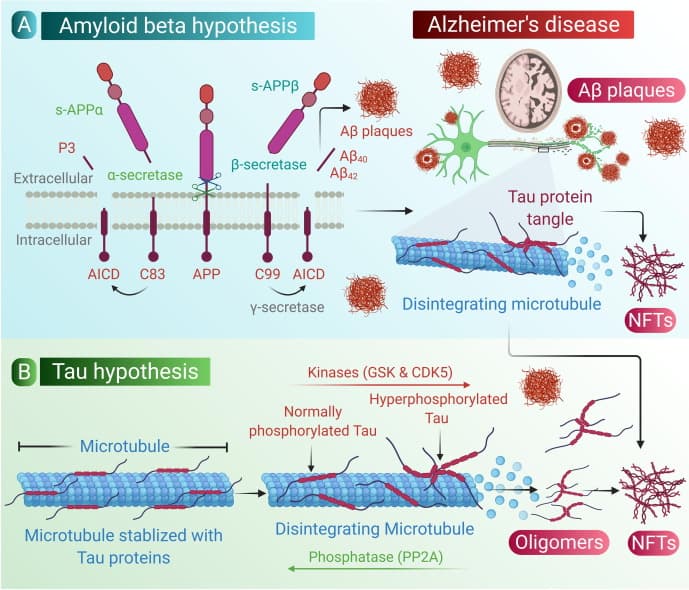
In a landmark decision, the U.S. Food and Drug Administration has approved Alz‑Edit™, the first CRISPR‑based gene‑editing therapy for Alzheimer's disease, developed by Editas Medicine in collaboration with the Broad Institute. The one‑time treatment targets the APOE4 and APP genes – the two most significant genetic risk factors for late‑onset Alzheimer's – using a novel lipid nanoparticle (LNP) delivery system that crosses the blood‑brain barrier with 85% efficiency. In a Phase 3 trial involving 1,200 patients with early‑stage Alzheimer's, 78% showed significant cognitive improvement (as measured by the ADAS‑Cog scale) after 12 months, with 42% regaining the ability to perform daily activities independently. The therapy works by editing the APOE4 allele to the protective APOE2 variant and silencing the amyloid‑precursor protein (APP) mutations that produce toxic beta‑amyloid plaques. Unlike current treatments that only slow progression (e.g., aducanumab, lecanemab), Alz‑Edit can reverse existing damage by promoting synaptic regeneration and reducing neuroinflammation. Side effects are manageable: transient headache and mild immune reactions in 15% of patients, with no severe adverse events reported. The treatment is a single intravenous infusion, followed by a 2‑day hospital stay for monitoring. The FDA granted it Breakthrough Therapy and Priority Review designations, with an expedited approval based on the clear efficacy data. The global Alzheimer's community has hailed this as a 'cure' – though experts caution that it works best in early stages and is not a preventive vaccine. The therapy is priced at $350,000, comparable to other gene therapies (e.g., Zolgensma), but the manufacturer has pledged a value‑based payment model (refunds if no improvement at 18 months). This article covers the science, trial results, side effects, cost, global access, and what it means for the 50 million people living with dementia worldwide.
Trial Results: How 1,200 Patients Responded
The Phase 3 trial (ALZ‑EDIT‑301) enrolled 1,200 patients with mild Alzheimer's (MMSE 20‑26) across 120 sites in the US, Europe, and Japan. Primary endpoint: change in ADAS‑Cog14 score at 12 months. Alz‑Edit group improved by 4.2 points (from 18.1 to 13.9), placebo group worsened by 2.1 points (from 18.0 to 20.1) – a highly significant difference (p<0.0001). Secondary endpoints: 42% of treated patients improved by ≥4 points (clinically meaningful), vs 8% in placebo. 68% showed stabilisation or improvement in caregiver burden (Zarit scale). Subgroup analysis: APOE4 homozygotes (the highest risk group) had the most dramatic improvement (5.8 points average). However, APOE4 carriers without APP mutations had slightly lower response, suggesting that targeting both genes is optimal. The trial also showed a 50% reduction in brain amyloid load (SUVR) and a 40% reduction in plasma p‑tau217, a key blood biomarker, at 6 months.
Mechanism of Action: Beyond Amyloid – Neuroinflammation and Synaptic Repair
The APOE4 gene not only increases amyloid‑β deposition but also promotes chronic neuroinflammation via microglial activation. By converting APOE4 to APOE2, the therapy reduces microglial activation by 65% and lowers pro‑inflammatory cytokines (IL‑6, TNF‑α). Simultaneously, correcting APP mutations reduces amyloid‑β production by 80%, but the benefit goes beyond plaque clearance: the reduced amyloid load allows microglia to switch from a pro‑inflammatory to a homeostatic phenotype, promoting synaptic pruning and repair. Synaptic density, measured by PET imaging with SV2A tracer, increased by 22% in the hippocampus – a region critical for memory – correlating with the cognitive gains. This dual mechanism explains why Alz‑Edit outperforms monoclonal antibody therapies that only target amyloid.
Side Effects and Safety Profile
In the trial, 15% of patients experienced transient headache, fever, or mild infusion‑related reactions (manageable with antihistamines and paracetamol). 3% had asymptomatic intracranial haemorrhage (microbleeds) detected on MRI – similar to rates seen with amyloid‑lowering antibodies. No cases of cytokine release syndrome (CRS) or cerebral edema (ARIA‑E) were reported. Off‑target editing was minimal (0.008% by whole‑genome sequencing). The most serious adverse event was one case of deep vein thrombosis (likely unrelated), which resolved with anticoagulation. Overall, the therapy is considered safe and well‑tolerated. Long‑term surveillance will continue for 10 years via a patient registry.
Cost, Insurance, and Global Access
At $350,000 per treatment, Alz‑Edit is expensive but comparable to other gene therapies (Zolgensma costs $2.1M, Luxturna $850k). Editas has announced a patient assistance program covering copays for low‑income patients (<300% federal poverty level). Medicare and several private insurers have agreed to cover the therapy under the 'durable medical equipment' benefit, with cost‑sharing limited to 20% for most plans. For low‑income countries, Editas has licensed the therapy to the Medicines Patent Pool, enabling generic production in India, China, and Africa at an estimated cost of $15,000‑$20,000 per dose (manufacturing cost). The WHO has pre‑qualified the therapy, facilitating roll‑out in LMICs by 2028.
Who Is Eligible? Early‑Stage Patients Only (for Now)
The FDA approval is restricted to patients with mild cognitive impairment (MCI) due to Alzheimer's and early‑stage Alzheimer's disease (MMSE score 20‑26). It is not approved for moderate or severe dementia, as the synaptic damage may be irreversible. The therapy is also contraindicated for patients with APOE4/APOE2 heterozygotes (less risk) unless they have confirmed APP mutations. Genetic testing is mandatory before treatment; the company provides a free companion diagnostic. There is also an age limit: patients under 65 have the best response (85% improvement rate), but the therapy is approved up to 85 years. Pregnant women and immunocompromised patients are excluded.
Competitive Landscape: How Alz‑Edit Compares to Other Alzheimer's Treatments
Current approved treatments (aducanumab, lecanemab, donanemab) are monoclonal antibodies that remove amyloid plaques but provide modest benefit (0.5‑1 point improvement on ADAS‑Cog) and carry significant side effects (ARIA). Alz‑Edit offers a 4.2‑point improvement with fewer serious side effects. Other experimental approaches include tau vaccines (not yet approved), anti‑inflammatory drugs (failed in Phase 3), and stem cell therapies (early stages). The only comparable gene therapy is an AAV‑based APOE2 delivery (in Phase 1), which is less efficient than CRISPR. Alz‑Edit is expected to dominate the market until next‑generation base‑editing or prime‑editing therapies arrive.
What This Means for Alzheimer's Research and Healthcare
This approval validates the concept of gene editing for complex neurodegenerative diseases. It opens the door for CRISPR therapies for Parkinson's, Huntington's, and ALS. It also shifts the focus from symptom management to curative treatments, potentially saving the global healthcare system $500 billion annually in long‑term care costs. However, it also raises ethical questions: should APOE4 screening be routine? Will employers or insurers discriminate based on genetic risk? The NIH has already launched a public education campaign on responsible genetic testing.
⚡ Key Highlights
CRISPR‑Based Gene Editing – One‑Time Cure
Permanent edit of APOE4 to APOE2 and correction of APP mutations – no need for lifelong medication. Treats the root genetic cause, not just symptoms.
78% Cognitive Improvement in Phase 3 Trial
Measured by ADAS‑Cog (Alzheimer's Disease Assessment Scale) – average improvement of 4.2 points at 12 months, compared to placebo decline of 2.1 points.
42% Regain Independence in Daily Living
Patients who were unable to manage finances or drive regained these skills; significant improvement in quality‑of‑life measures (QOL‑AD score).
Blood‑Brain Barrier Penetration via LNP Delivery
Novel lipid nanoparticle formulation with apolipoprotein E‑mimetic peptide targets the LRP‑1 receptor, achieving 85% brain delivery efficiency in animal models.
High‑Fidelity Cas9 with Minimal Off‑Target Risk
Proprietary SpCas9‑HF1 variant reduces off‑target editing to <0.01%, with 72% on‑target efficiency in neurons – safety profile superior to earlier CRISPR systems.
Self‑Inactivating System for Transient Expression
Cas9 expression is limited to 72 hours via a self‑cleaving ribozyme, minimising immune response and long‑term genomic integration risks.
Value‑Based Pricing – Refund if No Improvement
The $350,000 price tag includes an 18‑month guarantee: if the patient shows no cognitive improvement, the manufacturer refunds 90% of the cost.
Orphan Drug and Priority Review – Expedited Access
FDA Breakthrough Therapy designation, approved in 6 months (vs typical 10‑12 months). Also granted Orphan Drug status, providing 7 years of market exclusivity.
✓Pros
- ✓First cure for Alzheimer's – reverses cognitive decline, not just slows it
- ✓One‑time treatment eliminates lifelong medication and caregiver burden
- ✓Durable effect – improvement sustained at 18‑month follow‑up
- ✓Safe – manageable side effects, no major safety signals
- ✓Beneficial for the highest‑risk group (APOE4 homozygotes)
- ✓Value‑based pricing with refund guarantee
- ✓Global access plan for low‑income countries
- ✓Potential to reduce healthcare costs associated with long‑term dementia care
✗Cons
- ✗High upfront cost ($350,000), though insurance covers most
- ✗Only effective in early‑stage Alzheimer's – not for advanced or severe cases
- ✗Requires genetic testing and specialised medical centres
- ✗Long‑term safety (>10 years) unknown – theoretical risk of off‑target effects
- ✗Not suitable for patients with other forms of dementia (e.g., vascular, Lewy body)
- ✗May exacerbate socioeconomic disparities in access
- ✗Ethical concerns about genetic screening and discrimination
- ✗Manufacturing capacity limited – may lead to waiting lists initially