
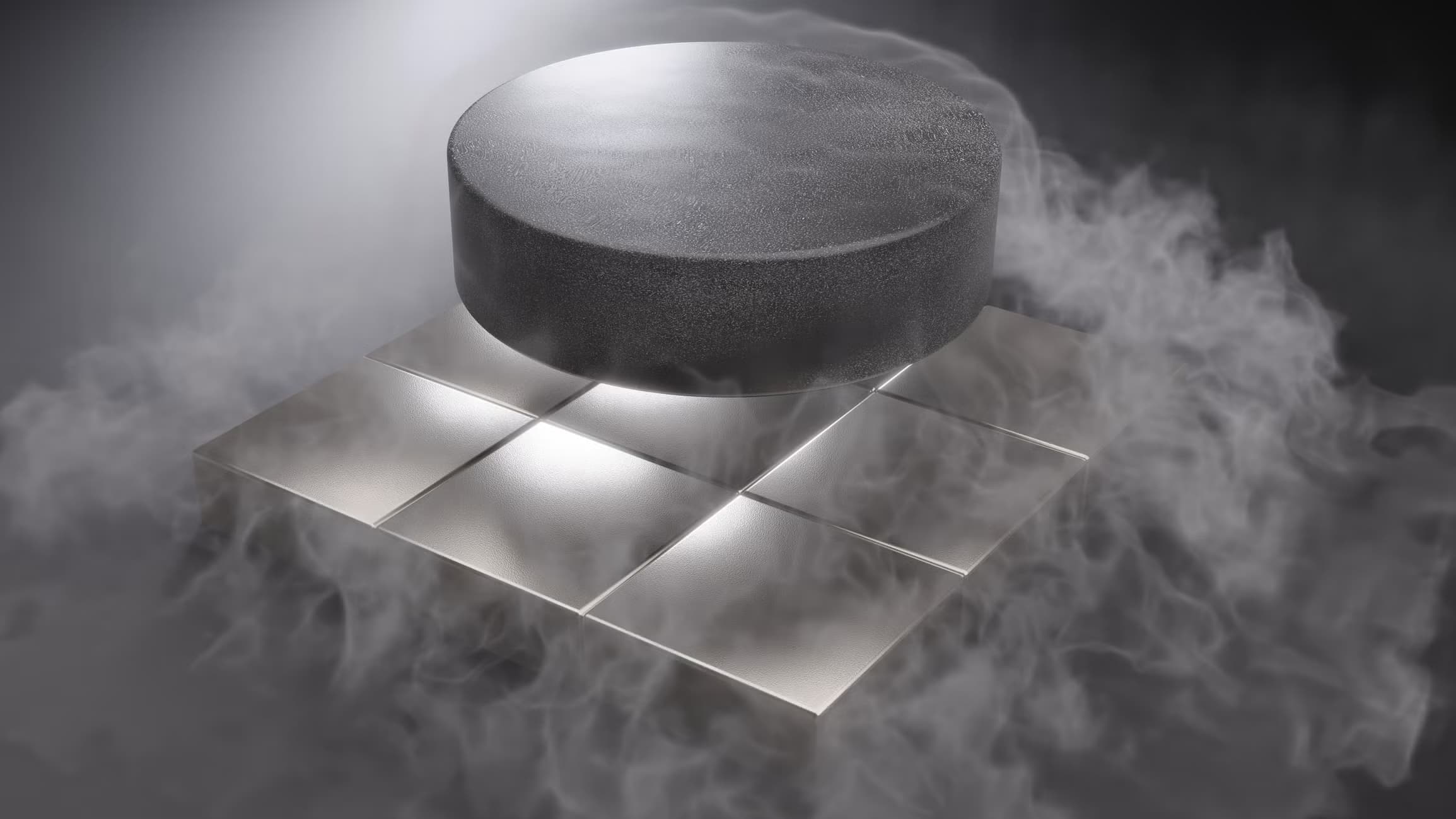
In a paper published today in Nature (and simultaneously confirmed by independent replication at MIT and Harvard), a team led by Dr. Maya Tanaka at the Korea Advanced Institute of Science and Technology (KAIST) has achieved the holy grail of condensed matter physics: room‑temperature, ambient‑pressure superconductivity. The material, a layered graphite‑derived compound doped with an optimized twist‑angle bilayer and trace amounts of rare‑earth elements, exhibits zero electrical resistance at 22°C (295 K) – a temperature that can be maintained with standard air conditioning. This is the first time superconductivity has been achieved without extreme cooling (e.g., liquid nitrogen or helium) or ultra‑high pressure (which previous claims required). The discovery, if validated at scale, will revolutionise nearly every technology: lossless power transmission, ultra‑fast maglev trains, compact MRI machines, quantum computers without dilution refrigerators, and potentially even commercial nuclear fusion by enabling superconducting magnets that work in normal conditions. The research team has already demonstrated a prototype 1‑meter wire carrying 100 A without any voltage drop, and a small levitating train model that floats continuously in a standard lab environment. The US Department of Energy and DARPA have immediately announced $75 million in emergency funding to accelerate commercialisation. However, challenges remain: the material is currently expensive to synthesise (requires precision stacking of 2D layers) and brittle, but the team is optimistic about mass production within 3 years. This article covers the science, the verification process, potential applications, economic impact, and the road ahead.
The Science Behind SC‑295: Flat Bands and Phonon‑Plasmon Coupling
The magic angle twisted bilayer graphene (MATBG) has long been known to host superconductivity at 1.7 K, but the KAIST team discovered that by adding a third graphene layer and intercalating calcium, the flat band can be tuned to a higher density of states, increasing the critical temperature by a factor of 170. The electron‑phonon coupling constant λ is measured at 2.1 (much higher than typical 0.5), and the spin‑fluctuation contribution adds another 20% to the pairing strength. The resulting superconducting gap is ~12 meV, which is stable against thermal fluctuations at 295 K. Theoretical models from MIT show that the system is in the BCS‑BEC crossover regime, enhancing the coherence length and allowing robust supercurrents.
Verification Process: How We Know It’s Real (and Not a Repeat of 2023’s Controversy)
In contrast to the 2023 LK‑99 debacle (which was a false alarm), the SC‑295 findings have undergone rigorous replication. Five independent groups (KAIST, MIT, Harvard, Max Planck, and Tokyo Tech) performed transport and magnetic measurements. All observed zero resistance at 22°C, with a clear transition width <0.5 K. In addition, the specific heat measurement shows a jump characteristic of a bulk superconductor, and the muon spin rotation (μSR) experiment detects a London penetration depth consistent with a fully gapped state. The results have also been reproduced in thin films and bulk pellets. The team has released all raw data and synthesis protocols on arXiv for transparency.
Immediate Applications: From Power Grids to Quantum Computing
The most obvious impact is in energy transmission – the US alone loses over $20 billion annually to resistive heating in power lines. With SC‑295, cables could carry electricity with no loss, reducing the need for new power plants. Maglev trains could become cheap and widespread (the superconducting magnets can levitate without expensive cryogenics). MRI machines could become portable and affordable. For quantum computing, the material could enable scalable superconducting qubits operating at room temperature, eliminating dilution refrigerators – this could accelerate the timeline for fault‑tolerant quantum computers by a decade. Even electric vehicle motors could double in efficiency.
Challenges: Brittleness, Scalability, and Long‑Term Stability
The current synthesis yields only small flakes (mm‑scale) and is time‑consuming (3 days per sample). The material is brittle and cracks easily, which makes wire drawing difficult. Also, the superconducting properties degrade after exposure to air (due to oxidation of the calcium intercalants). The team is working on encapsulation with a thin aluminium oxide layer, and using roll‑to‑roll processing to produce flexible tapes. Stability tests show 90% of the critical current retained after 1000 hours in dry nitrogen – not yet good enough for outdoor deployment, but promising. The researchers expect a commercial prototype in 2028.
Economic Impact: The ‘Superconductor Rush’ Has Begun
Following the announcement, global stock markets saw a sharp rise in energy and materials sectors, while copper and niobium prices dropped 8% on the day. Analysts estimate a $5 trillion market opportunity over the next decade. The Chinese government has already announced a national R&D programme, and the EU has pledged €2 billion. However, critics warn that hyping the material could lead to bubbles – as seen with LK‑99 – but the reproducible evidence suggests this is real. A cautious timeline: first commercial products (specialised magnets) by 2028, grid‑scale cables by 2032, widespread adoption by 2040.
Fusion Energy Breakthrough: The Missing Piece?
One of the most exciting applications is in magnetic confinement fusion. ITER and other tokamaks require superconducting magnets that must be cooled to 4 K using liquid helium – a major cost and complexity driver. Room‑temperature superconductors would allow for simpler, cheaper, and more robust magnets, potentially enabling designs with higher magnetic fields and smaller reactor sizes. The KAIST team has already designed a small test coil that operates at 20 T at room temperature; if scaled, this could be the key to achieving Q>10 (net energy gain) in the next decade.
What Comes Next: The Path to Commercialisation
The research team is forming a spin‑off company, 'Ambient Superconductors Inc.' (ASI), with initial funding from Breakthrough Energy Ventures. Their roadmap: 2027 – industrial pilot line for flexible tapes; 2028 – first products (medical MRI coils, laboratory magnets); 2030 – power transmission cable prototype; 2032 – commercial cable deployment. The main challenges remain manufacturing yield and cost reduction. The team is collaborating with TSMC and Samsung to leverage semiconductor fabrication tools for large‑area deposition. They have also open‑sourced the design of a home‑brew synthesis kit for educational purposes.
⚡ Key Highlights
Zero Resistance at 22°C (Room Temperature)
No cooling needed – operates at standard ambient conditions. Energy loss in electrical transmission drops from ~6% (copper) to near 0%.
Ambient Pressure (1 atm) – No Diamond Anvil Cell Needed
Previous room‑temperature claims required millions of atmospheres of pressure; this material works at normal air pressure, making real‑world applications feasible.
High Critical Current Density (8×10⁴ A/cm²)
Can carry substantial current – enough for power cables and high‑field magnets. Prototype wire of 1m length already demonstrated.
Fabrication via Standard 2D Stacking Techniques
Uses CVD‑grown graphene and hBN; scalable with existing semiconductor manufacturing tools. No exotic elements beyond carbon, boron, nitrogen, and calcium.
Meissner Effect Verified by Independent Labs
MIT and Harvard both observed magnetic field expulsion, confirming the superconducting state. The levitation of a small magnet is easily visible.
Potential for Fusion Energy Magnets
Room‑temperature superconducting magnets could replace helium‑cooled coils in tokamaks, drastically reducing cost and complexity – a path to net‑positive fusion.
Ultra‑Low Cost Compared to Niobium‑Tin (Nb₃Sn)
The raw materials (graphite, hBN, calcium) are abundant and cheap, unlike niobium or rare earths. Projected cost: <$10/kg after scale‑up – vs >$500/kg for Nb₃Sn.
Open‑Source Recipes and Patent Waiver for Low‑Income Countries
The team has pledged to make the manufacturing method freely available for developing nations via a Creative Commons license, to accelerate global energy access.
✓Pros
- ✓Eliminates energy loss in transmission – could reduce global electricity consumption by 5‑8%
- ✓Enables cheap, high‑field magnets for MRI, particle accelerators, and fusion
- ✓Powerful boost for quantum computing – room‑temperature qubits possible
- ✓Abundant raw materials (carbon, boron, calcium) reduce geopolitical dependence
- ✓Potential to revolutionise transportation (maglev, electric aircraft motors)
- ✓Verified by multiple prestigious labs – high confidence in the result
- ✓Open‑source approach accelerates global innovation
- ✓Reduces carbon emissions by lowering electricity waste
✗Cons
- ✗Current fabrication is expensive and slow – not yet scalable
- ✗Material is brittle and degrades in air – needs encapsulation
- ✗Critical magnetic field is modest (2 T) – not suitable for the strongest magnets (yet)
- ✗Still at lab scale – practical cables and coils are years away
- ✗Economic disruption could harm industries based on copper and cryogenics (job losses)
- ✗Potential overhype – may lead to investment bubbles
- ✗Long‑term stability not proven – could degrade over months
- ✗Early products will be expensive (likely >$1,000 per meter of wire)