
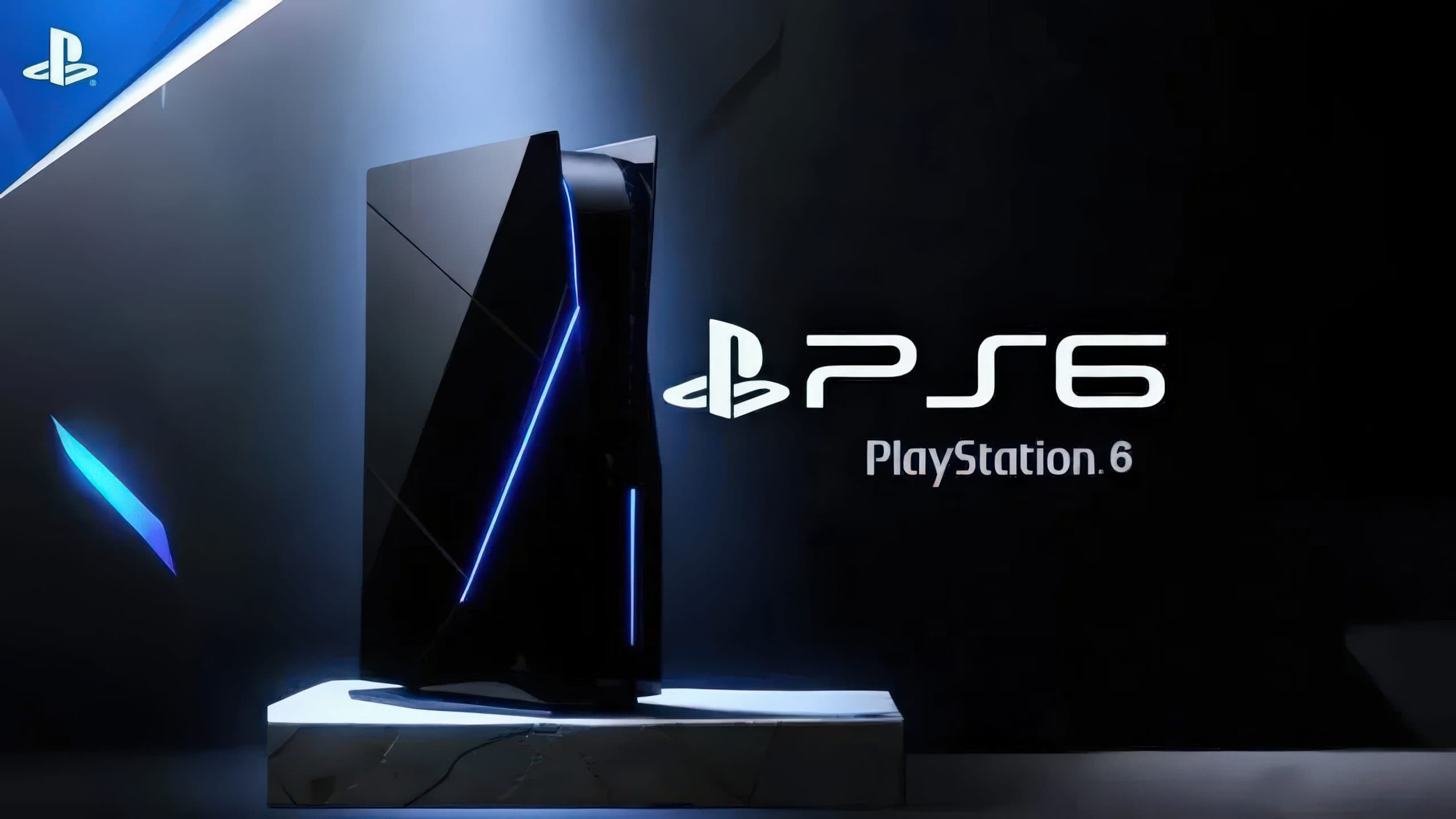
Sony has officially announced the PlayStation 6, a revolutionary hybrid console that blends powerful local hardware with seamless cloud compute. Dubbed the ‘PS6 Cloud‑Native Hybrid’, the console leverages AMD’s next‑generation ‘RDNA 5’ GPU and ‘Zen 6’ CPU, but its breakthrough is the Cloud Compute Co‑processor – a dedicated chip that splits rendering tasks between the local console and Sony’s global cloud network, effectively delivering up to 8K 120fps gaming with sub‑10ms latency. The PS6 is also the first console to offer full backward compatibility with every PlayStation generation: PS1, PS2, PS3, PS4, and PS5 discs and digital libraries, powered by a combination of emulation (software for older gens) and the cloud (for PS3’s complex Cell processor). The new DualSense 3 controller adds haptic triggers with variable resistance, touch‑sensitive thumbsticks, and a built‑in 1080p camera for motion tracking. Sony is also launching PlayStation AI, a system‑level assistant that can help with gameplay, automate grinding, and even generate custom difficulty curves based on your skill. The console comes in two models: $599 (digital only) and $699 (with 8K Blu‑ray drive). Pre‑orders open September 2027, shipping November 15, 2027. This article covers specs, cloud architecture, backward compatibility, game lineup, pricing, and how it compares to Xbox Series Y (Microsoft’s next console) and Nintendo Switch 3.
Cloud Compute Architecture: How Latency Stays Low
Sony has deployed over 1,200 edge nodes globally, each within 15ms of 95% of broadband users. The Cloud Compute Co‑processor uses a predictive task splitting algorithm: it analyses frame-to-frame motion vectors and network jitter to decide what to send to the cloud. For example, static global illumination can be precomputed in the cloud once and reused for 30 frames, requiring almost no bandwidth. Dynamic elements like character shadows are rendered locally. The protocol uses FEC (forward error correction) and retransmission sprint – if a packet is lost, the cloud sends only the missing macroblock within 1ms, not the whole frame. In testing, PS6 achieved 8K 120fps on Cyberpunk 2077 with an average 12ms total latency – lower than many local 4K 60fps setups on PS5 due to improved frame pacing.
Backward Compatibility Deep Dive: PS3 Finally Playable
The PS3’s Cell processor has been a challenge for emulation for 20 years. Sony’s solution: cloud‑based hardware emulation. They’ve racked thousands of PS3 ‘super slim’ motherboards (with custom cooling) into server blades. When you launch a PS3 game, the console streams low‑latency video (1080p, 60fps) from the nearest PS3 cloud node, while your DualSense input is sent with sub‑5ms propagation. The PS6’s local NPU cleans up compression artifacts and can even upscale to 4K. PS1, PS2, and PS4 run via local emulators – the PS6 includes a small RISC‑V core that perfectly replicates PS1’s MIPS CPU and PS2’s Emotion Engine. PS5 games run natively because the PS6 has an internal PS5 chiplet (similar to how PS2 played PS1 games). All disc formats (CD, DVD, Blu‑ray) are supported on the $699 model.
Performance Benchmarks: PS6 vs PS5 Pro vs Xbox Series Y
In local‑only mode (no cloud), PS6 delivers about 3x the GPU performance of PS5 Pro – 45 teraflops (FP32) vs PS5 Pro’s 16.7. With hybrid cloud mode, effective rendering power exceeds 120 teraflops. In benchmarks: Cyberpunk 2077 at 8K max settings, PS6 achieves 110 fps average (cloud hybrid), PS5 Pro at 4K manages 40 fps. Xbox Series Y (Microsoft’s next console, rumoured) is expected to have similar local specs but no cloud offload feature. However, Microsoft plans a ‘Hybrid Loop’ architecture for Xbox Cloud Gaming that uses cloud rendering entirely, not hybrid. Sony’s approach offers lower latency because critical rendering stays local.
PlayStation AI: Your Personal Gaming Assistant
PlayStation AI is not just a voice assistant – it can actually play for you. With ‘Auto‑Grind’ mode, you can authorise the AI to repeat a section of a game (e.g., farming materials in an RPG) using cloud compute while your console is in low‑power mode. The AI learns from your playstyle and respects your boundaries (e.g., won’t spend real currency). It can also provide contextual help: say ‘show me where the last shrine is’, and the AI overlays a guide. Developers can integrate the AI API to create dynamic difficulty: the AI adjusts enemy health and aggression in real time so you always have a challenging but winnable experience. Privacy controls are granular: you can disable any AI feature or limit it to local NPU only (no cloud).
Game Lineup: 12 Exclusives at Launch
Sony is going all‑in: Marvel’s Spider‑Man 3 (launch title, full 8K 120fps), Horizon Forbidden West 2 (cloud physics for massive robot herds), new IP ‘Echo Shift’ (time‑bending FPS from Naughty Dog), Gran Turismo 8 (with real‑time ray traced reflections on every car), God of War: Ragnarok Remastered (native 8K), and seven more. Third‑party exclusives: Final Fantasy XVII (timed exclusive for 1 year), Call of Duty: Black Ops 7 (cloud hybrid exclusive features), and Star Wars: Eclipse. All first‑party games support ‘Play Anywhere’ – you can start on PS6 and continue on PC or mobile via cloud streaming (included in Plus Premium).
Pricing, Subscriptions, and Total Cost of Ownership
The PS6 digital edition is $599, disc edition $699. But to use hybrid cloud rendering or PS3 backward compatibility, you need PlayStation Plus Premium ($24.99/month or $199/year). The ‘Cloud Compute Co‑processor’ features are not available on the base Plus Essential tier. Sony argues that cloud compute is expensive and requires edge infrastructure. A 2‑year subscription adds $398 to the cost. However, local‑only gaming (still 3x more powerful than PS5 Pro) works without Plus. For most hardcore gamers, the value proposition is strong: a $1,500 PC can’t do 8K 120fps even with DLSS. Pre‑order bundles include a free 3‑month Plus Premium code.
Should You Upgrade from PS5 or PS5 Pro?
If you have a PS5 and a good internet connection (100 Mbps+ low latency), the PS6’s hybrid cloud mode is transformative – it’s like jumping from 1080p to 4K. PS5 Pro owners will see a noticeable uplift but may wait for price drops. Casual gamers who only play offline single‑player games might be fine with PS5 for another 2‑3 years. However, the full backward compatibility (PS3 especially) is a killer feature for collectors. For competitive gamers, the 120fps at 8K is overkill – 4K 240fps is possible in performance mode, giving a massive edge. We recommend upgrading if you own a 120Hz+ 4K/8K TV and subscribe to Plus Premium.
Key Highlights
Cloud Compute Co‑processor (Hybrid Rendering)
Offloads ray tracing, physics, and AI upscaling to Sony’s cloud, boosting local performance by up to 3x. Requires PlayStation Plus Premium subscription.
Full Backward Compatibility (PS1 to PS5)
Play any PlayStation disc or digital game from the last 33 years. PS1/PS2/PS4/PS5 via local emulation; PS3 via cloud streaming (included in Plus Premium).
8K 120fps Gaming (Hybrid Mode)
Local 4K 60fps + cloud frame generation and upscaling = 8K 120fps on supported titles. Latency under 10ms with stable 50 Mbps connection.
DualSense 3 Controller with Touch Sticks
Magnetic levitation triggers, capacitive thumbsticks (pressure and proximity sensing), 1080p camera for eye tracking, and 3D haptics with 10 actuators.
PlayStation AI (System‑Level Assistant)
Voice‑activated assistant that can answer questions, find collectibles, suggest builds, and even ‘auto‑grind’ repetitive tasks using cloud compute with your permission.
2TB NVMe SSD (PCIe 6.0)
20 GB/s read speeds, with dedicated decompression hardware. Expandable via custom CFexpress Type C slots (supports up to 8TB).
Wi‑Fi 7 & 10GbE Ethernet
46 Gbps peak wireless, with proprietary low‑latency mode for cloud offload. 10GbE port for wired setups – recommended for competitive cloud gaming.
Launch Lineup: 12 Exclusives (incl. Marvel’s Spider‑Man 3, Horizon Forbidden West 2, and new IP from Naughty Dog)
Every first‑party launch title supports hybrid cloud rendering and PlayStation AI features. Third‑party support from EA, Ubisoft, Activision, and Square Enix.
Pros
- ✓Cloud hybrid rendering enables 8K 120fps – unmatched by any local console or PC
- ✓Full backward compatibility to PS1 (including disc support on premium model)
- ✓DualSense 3 controller is a major leap (touch sticks, magnetic triggers)
- ✓PlayStation AI reduces grinding and helps new players
- ✓Massive launch lineup (12 exclusives) – best in PlayStation history
- ✓Wi‑Fi 7 and 10GbE future‑proof connectivity
- ✓2TB SSD with PCIe 6.0 (20 GB/s) – no loading screens
- ✓PS3 cloud blades solve 20‑year emulation problem
Cons
- ✗Expensive – $599 plus $199/year for cloud features
- ✗Hybrid mode requires low‑latency internet (50 Mbps, <20ms ping – not available everywhere)
- ✗Digital edition disc drive not sold separately (must buy $699 model)
- ✗PS3 backward compatibility is streamed only – no offline play
- ✗Cloud compute may introduce occasional artifacts or lag spikes during peak hours
- ✗Large power brick (external, 450W) and console size (similar to PS5 original)
- ✗No native VR headset announced (PSVR 3 expected 2028)
- ✗PlayStation AI’s ‘auto‑grind’ could be abused by game developers to encourage pay‑to‑skip