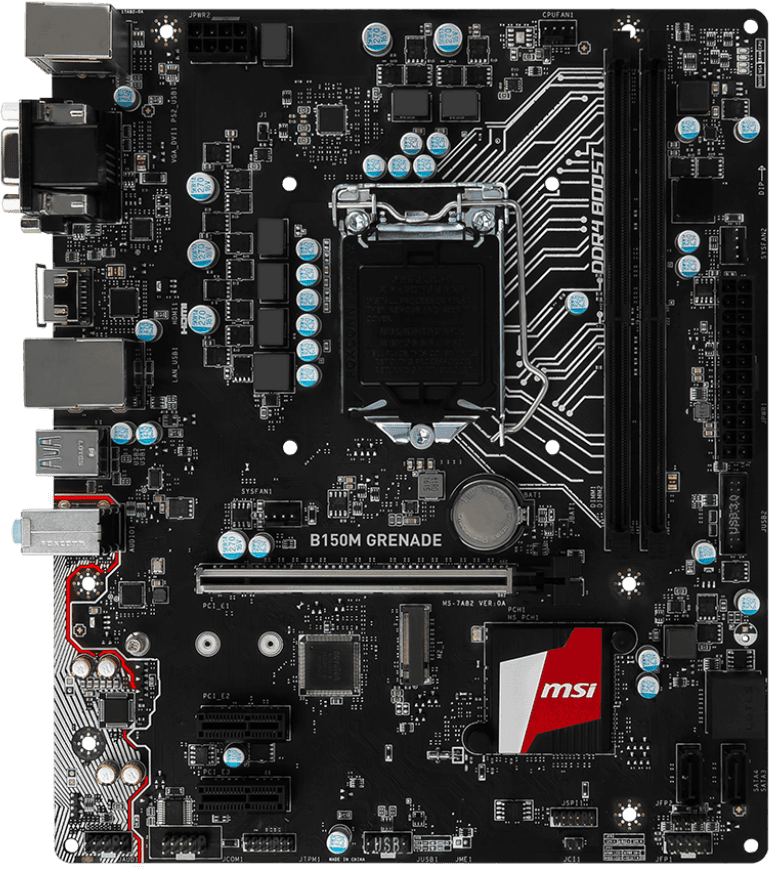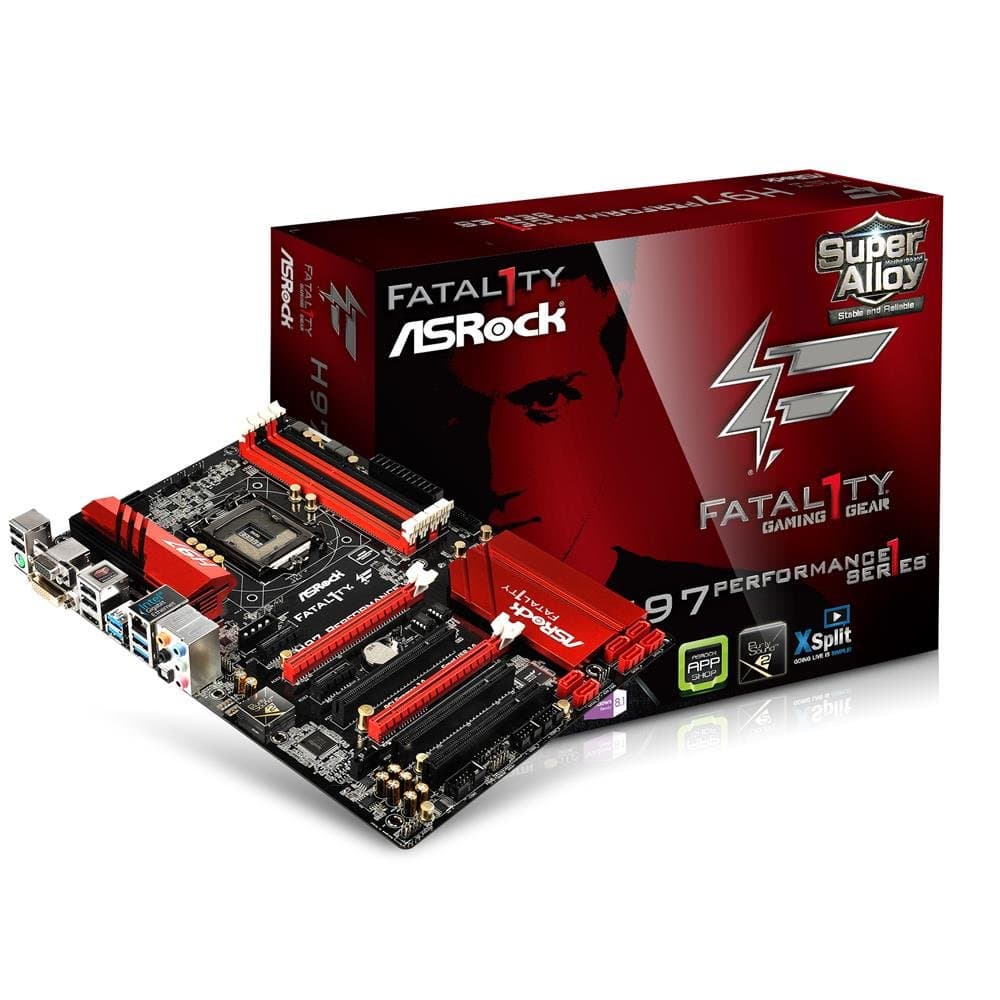


Maxsun MS-B150D4 Turbo
Unlocking enterprise-grade stability and DDR4 performance for value-conscious system builders.
Overview
How It Works
CPU Initialization and Power Distribution
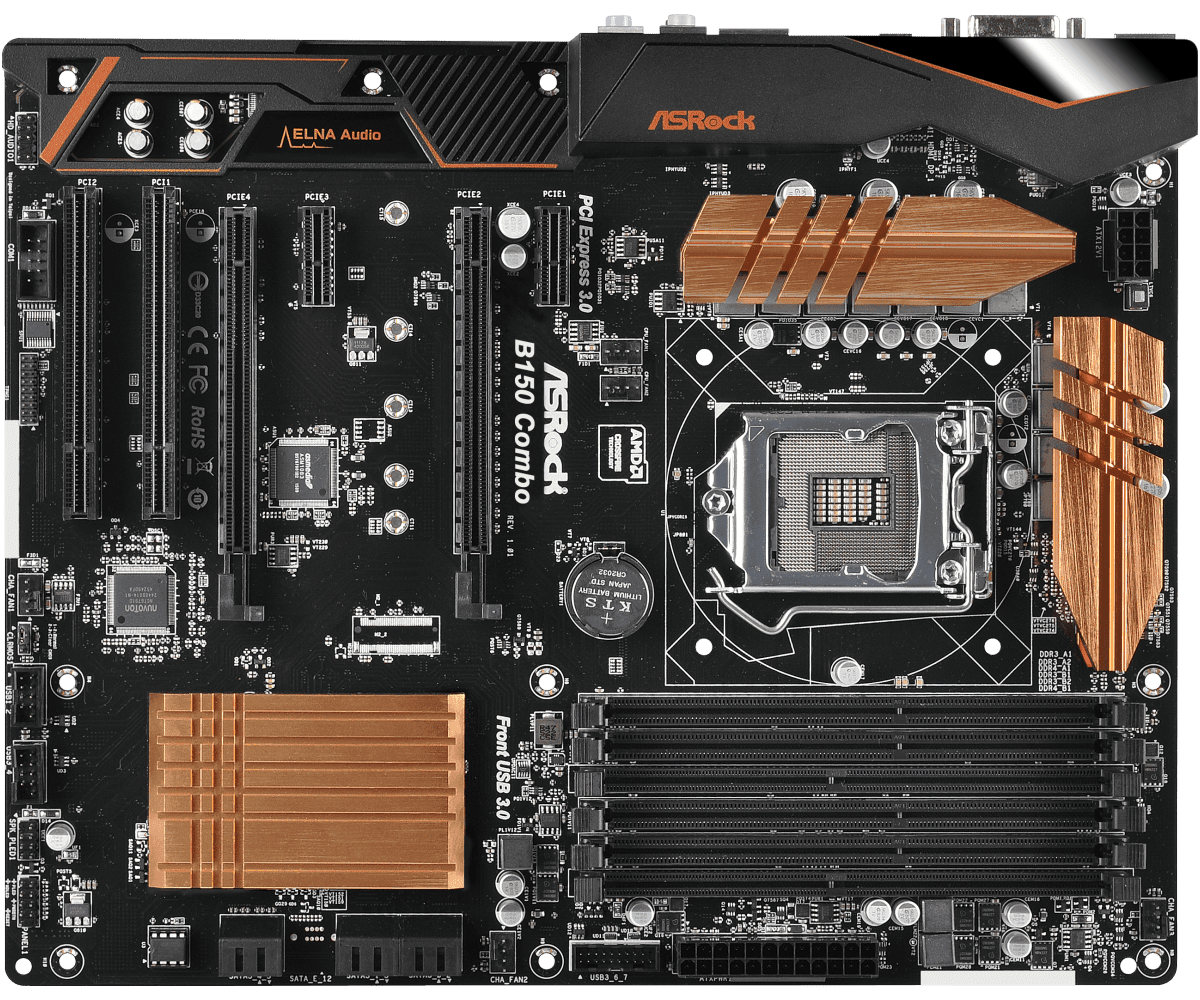
Upon pressing the power button, the motherboard's multi-phase VRM stabilizes 12V power down to core voltages required by the LGA 1151 processor, executing initial UEFI boot routines.
Memory Training and IMC Handshake
The system initializes the dual-channel DDR4 memory slots, running built-in memory training protocols to establish stable frequency and latency timings with installed modules.
Bus Allocation and Peripherals
The Intel B150 chipset allocates high-speed PCIe 3.0 lanes to the primary graphics slot while routing storage and USB controller traffic through internal high-bandwidth internal buses.
Key Features
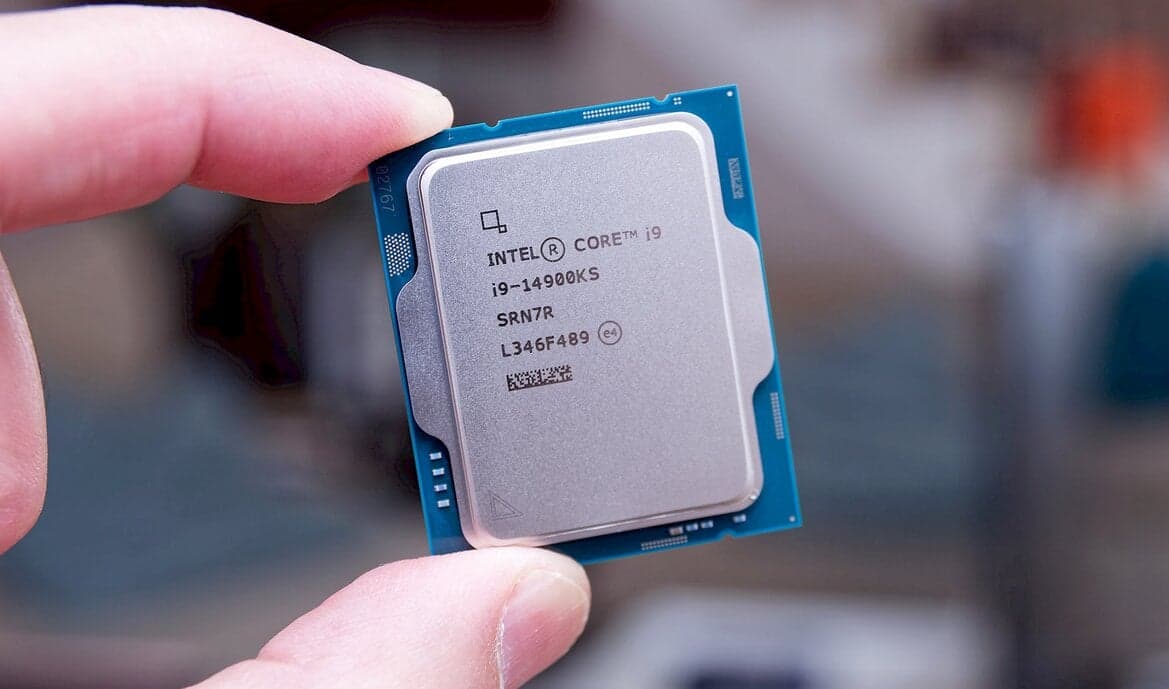
Intel LGA 1151 Socket
Fully compatible with 6th and 7th Generation Intel Core i7, i5, i3, Pentium, and Celeron processors.
Dual-Channel DDR4 Support
Features memory slots supporting high-bandwidth DDR4 modules for improved multitasking and responsiveness.
PCIe 3.0 x16 Steel Slot
Reinforced primary expansion slot ensures secure installation of heavy modern discrete graphics cards.
SATA 6Gb/s Storage Ports
Multiple high-speed storage interfaces for connecting traditional mechanical hard drives and fast solid-state drives.
Gigabit Ethernet Controller
Onboard high-speed wired networking interface optimized for low-latency gaming and file transfers.
High-Definition Audio Integration
Integrated multi-channel audio codecs with dedicated physical trace separation to reduce electromagnetic interference.
Robust Solid Capacitors
Durable component selection featuring solid-state capacitors for extended motherboard lifespan and thermal endurance.
Comprehensive Rear I/O Panel
Includes legacy and modern USB ports alongside multiple video output options for integrated graphics utilization.
Power Delivery and VRM Design
Engineered for sustained thermal and electrical stability
Multi-Phase Power Design
Distributes electrical load evenly across multiple phases to prevent localized overheating under high CPU utilization.
Solid State Capacitors
Offers superior ripple suppression and a significantly longer operational lifespan compared to traditional electrolytic capacitors.
Low RDS(on) MOSFETs
Minimizes electrical resistance during switching operations, reducing thermal output in the VRM area.
CPU Power Connector
Utilizes a standard 8-pin auxiliary power connector to deliver steady, clean current directly to the processor socket.
Thermal Padding
Employs dedicated heatsinks over critical power delivery components to dissipate heat during intense workloads.
Memory Architecture and Support
Unlocking modern DDR4 bandwidth capabilities
Dual-Channel Topology
Doubles the available memory bandwidth by interleaving data across two independent memory channels.
DDR4 Compatibility
Supports high-frequency DDR4 modules, delivering better energy efficiency and speed than older DDR3 platforms.
Optimized Trace Layout
Isolated memory circuitry minimizes cross-talk and electromagnetic interference for stable high-frequency operations.
Maximum Capacity
Supports ample RAM capacity configurations suitable for modern gaming and productivity applications.
XMP Profile Support
Simplifies the process of running memory kits at their rated manufacturer speeds with a single BIOS toggle.
Expansion and PCIe Connectivity
Flexible connectivity for dedicated graphics and add-in cards
PCIe 3.0 x16 Slot
Provides maximum available bandwidth for modern graphics cards, ensuring zero bottlenecking from the interface.
Reinforced Slot Construction
Physical reinforcement prevents sagging and structural damage when heavy triple-slot GPUs are installed.
PCIe x1 Slots
Multiple auxiliary slots for expansion cards such as dedicated sound cards, capture cards, or Wi-Fi adapters.
Lane Allocation
Managed by the Intel B150 chipset to guarantee stable, latency-free communication for all attached expansion hardware.
Backward Compatibility
Fully supports older PCIe 2.0 and 1.0 expansion cards without configuration issues.
Storage Subsystem and Connectivity
Reliable interfaces for mechanical and solid-state drives
SATA 6Gb/s Ports
Multiple native SATA ports allow simultaneous connection of multiple SSDs and high-capacity hard drives.
RAID Support
Enables data redundancy and performance aggregation through standard storage array configurations.
Optimized Port Placement
Angled and strategically positioned headers prevent cable interference with large graphics cards.
AHCI and NVMe via PCIe
Supports modern storage protocols for fast boot times and rapid file transfers.
Hot-Plugging Support
Allows compatible connected drives to be safely attached or removed while the system is powered on.
Networking and Audio Engineering
Immersive sound and reliable wired connectivity
Gigabit LAN Controller
Provides high-speed wired networking with advanced packet prioritization for online gaming.
Surge Protection LAN
Integrated hardware guards protect the network chipset against electrostatic discharge and lightning strikes.
Dedicated Audio PCB Shielding
Physical separation barrier isolates analog audio signals from digital noise generated by other components.
Premium Audio Capacitors
Delivers warm, high-fidelity acoustic reproduction for gaming and media consumption.
Multi-Channel Output
Supports surround sound configurations through standard rear audio jack groupings.
BIOS, Software, and System Management
User-friendly firmware configuration and monitoring
Graphical UEFI BIOS
Easy-to-navigate mouse-supported interface for adjusting hardware parameters and boot priorities.
Smart Fan Control
Customizable fan profiles balance cooling performance against acoustic noise levels.
Hardware Monitoring
Real-time telemetry tracking for voltages, temperatures, and fan speeds.
EZ Flash Utility
Simple BIOS update mechanism via USB flash drive without requiring an operating system.
Multiple Boot Profiles
Save and recall custom hardware profiles for different usage scenarios.
✓ Pros
- ✓Affordable entry point for LGA 1151 systems
- ✓Support for modern and efficient DDR4 memory
- ✓Reinforced primary PCIe 3.0 graphics slot
- ✓Solid capacitor build quality for enhanced durability
- ✓Reliable Gigabit LAN with surge protection
- ✓Clean audio layout with dedicated trace isolation
- ✓User-friendly graphical UEFI BIOS interface
✗ Cons
- ✗B150 chipset restricts CPU overclocking capabilities
- ✗Lacks native high-speed onboard M.2 NVMe slots
- ✗Limited USB 3.1 Gen 2 high-speed port selection
- ✗Only supports 6th and 7th gen Intel processors natively
Use Cases
Technical Specifications
Maxsun MS-B150D4 Turbo vs. Competitor Boards
| Feature | maxsunMsB150d4Turbo | gaB150mD3h | b150mA |
|---|---|---|---|
| Chipset | Intel B150 | Intel B150 | Intel B150 |
| Form Factor | Micro-ATX | Micro-ATX | Micro-ATX |
| Memory Slots | DDR4 Dual-Channel | DDR4 Dual-Channel | DDR4 Dual-Channel |
| PCIe Armor | Reinforced Steel Slot | Standard Plastic Slot | Standard Plastic Slot |
| Audio Shielding | Isolated Audio Trace Path | Basic Onboard Audio | Basic Onboard Audio |
Setup Tips
Verify CPU Pin Integrity
Inspect the LGA 1151 socket pins carefully before installing your processor to ensure no bent pins are present.
Populate RAM Correctly
Install your DDR4 memory modules into the designated dual-channel slots according to the manual for optimal bandwidth.
Connect Power Securely
Ensure both the 24-pin main ATX power connector and the 8-pin CPU power cable are firmly clicked into place.
Update UEFI BIOS
If using a 7th Generation Intel processor, update the BIOS to the latest version before finalizing your software installation.
Install Chipset Drivers
Download and install the latest Intel B150 chipset drivers immediately after booting into your operating system for maximum stability.
Frequently Asked Questions
Key Takeaway
The Maxsun MS-B150D4 Turbo is a reliable Micro-ATX motherboard built around the Intel B150 chipset and LGA 1151 socket. It delivers dependable performance for everyday computing and budget gaming by combining DDR4 memory support with solid-state capacitors and reinforced PCIe connectivity. Offering a cost-effective platform for 6th and 7th generation Intel processors, it provides great value for budget-conscious builders.