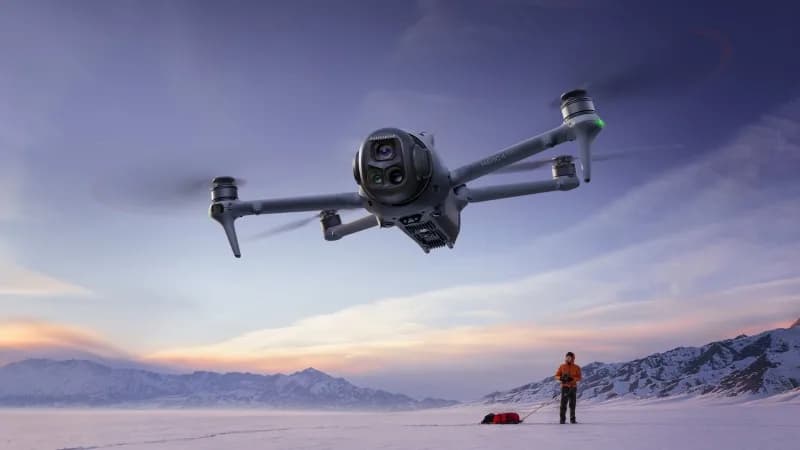

Independent security researchers discovered that drones utilized by the British Royal Navy were transmitting operational telemetry data to servers located in China. The investigation highlights significant supply chain vulnerabilities within military-grade hardware.
The Discovery of Unauthorized Data Exfiltration
A routine cybersecurity sweep aimed at identifying hardware vulnerabilities led to the alarming discovery that Royal Navy drones were actively communicating with infrastructure based in China. Security analysts conducting the audit identified that these unmanned aerial vehicles (UAVs) were configured to send telemetry data to overseas servers. While the specific nature of the data packets remains under investigation, the inherent risk of transmitting operational details to a foreign entity presents a major intelligence and security concern for the UK Ministry of Defence. This discovery exposes the dangers of relying on complex, globalized supply chains where software and hardware components may carry hidden connectivity features that bypass standard military security protocols. The findings suggest that the integration of commercial off-the-shelf or outsourced components into defense systems can introduce severe blind spots.
Supply Chain Vulnerabilities in Defense Procurement
The incident highlights the growing challenge of maintaining secure hardware integrity in an era of global electronics manufacturing. Modern drones rely on a sophisticated array of sensors, flight controllers, and communication modules that are frequently sourced from international suppliers. The presence of unauthorized data exfiltration routines suggests that either a malicious actor deliberately embedded a backdoor, or that generic firmware designed for broader commercial markets was left insufficiently modified for secure military deployment. This case underscores the difficulty defense agencies face in auditing codebases and hardware configurations for every sub-component used in their fleet. Without stringent, end-to-end oversight of every chip and line of code, military equipment remains susceptible to 'phone home' scenarios where sensitive mission-critical data is quietly leaked to external, potentially adversarial, locations.
Strategic Implications and National Security Concerns
The intelligence community and military leadership are now faced with the significant task of containing the damage caused by this data leak. If telemetry data—which can include location, flight path history, and operational status—has been siphoned off by Chinese servers, it could potentially allow for the tracking of British military assets or provide insights into their standard operating procedures. This vulnerability goes beyond simple privacy concerns; it directly impacts tactical readiness and operational security. As the Royal Navy reassesses its inventory and procurement procedures, the focus will likely shift to a more rigorous vetting process for all electronic equipment. The incident serves as a stark warning to other branches of the armed forces that assume off-the-shelf equipment is inherently 'clean' or secure simply because it has been commissioned for official government use.
The Challenge of Remediation
Fixing the vulnerability is far from a simple software patch. Because the issue appears to be tied to the foundational communication protocols of the drone's firmware, the UK military must now perform a comprehensive audit to determine how many units are affected and whether their functionality can be safely sanitized. This could involve recalling entire fleets, decommissioning specific models, or replacing critical communication modules entirely. Each of these steps introduces logistical delays that may impact current training or deployment schedules. Furthermore, the discovery raises questions regarding oversight during the procurement process. If these drones were vetted before deployment, the failure to detect this unauthorized traffic suggests that current security testing methods are not catching advanced, covert communication behaviors embedded in imported hardware.
⚖ The Balanced View
Concerns & criticism
The breach presents a severe risk to operational security, potentially exposing sensitive military asset locations and tactical patterns to foreign intelligence services.
→What's next
The Ministry of Defence is expected to launch a formal investigation to determine the scale of the compromise across its UAV fleet. Future procurement policies will likely prioritize domestic sourcing or significantly enhanced auditing requirements for all hardware components to prevent recurring supply chain infiltration.