
The Korea Aerospace Research Institute has published the first images documenting a SpaceX Falcon 9 rocket stage's impact on the Moon. The collision occurred following more than a year of orbital decay caused by gravitational forces from the Earth, Moon, and Sun.
Visual Confirmation of Lunar Impact
The Korea Aerospace Research Institute (KARI) successfully documented the aftermath of a space hardware collision on the lunar surface using its Danuri orbiter. Traveling at an altitude of 62 miles (100 kilometers) above the Moon, the satellite captured comparative imagery of the site both before and after the event. These photographs provide the first direct evidence of a SpaceX Falcon 9 rocket stage striking the Moon, confirming scientific projections regarding the impact's location and timing. While the resulting crater is significant—measuring dozens of feet across and nearly 12 feet deep—it remains a relatively minor feature when contrasted with the vast scale of the lunar landscape, which spans over 2,160 miles in diameter.
Scientific Observation and Detection
Prior to the visual capture by KARI, the scientific community had been tracking the trajectory of the rocket stage, which was predicted to strike the Moon based on complex orbital modeling. Astronomers utilizing the Very Large Telescope corroborated the event by detecting signatures of sodium and lithium vaporizing from the surface upon impact. While global space agencies, including NASA, had expressed skepticism about capturing the moment of impact due to unfavorable timing and atmospheric or observational constraints, the KARI data has now validated those early predictions. Efforts are currently underway to potentially secure higher-resolution imagery from other lunar orbiters, though researchers maintain that achieving a granular view of the impact site remains logistically challenging.
Context and Orbital Mechanics
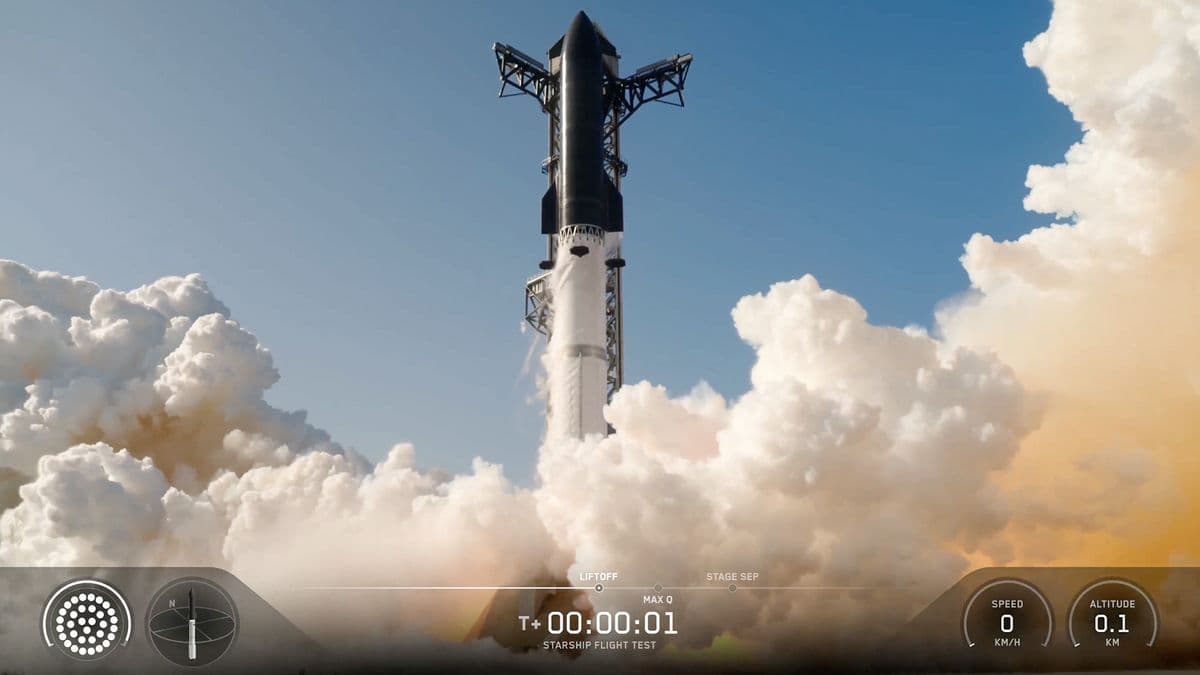
The rocket stage that struck the Moon was a remnant of a mission launched in January 2025, which was tasked with delivering lunar landers to their destination. Following the primary mission, the second stage entered an unstable orbit where it lingered for over a year. During this extended duration, the hardware was subjected to the shifting gravitational pulls of the Earth, the Moon, and the Sun. This gradual accumulation of orbital perturbations eventually forced the object onto a collision course with the lunar surface. The incident highlights the inherent difficulties in managing space debris, particularly for high-energy missions where the vehicle must utilize almost its entire fuel capacity to reach a lunar transfer orbit, leaving insufficient reserves for a controlled deorbiting procedure.
SpaceX Response and Industry Safety
In response to the confirmed impact, SpaceX provided commentary on the limitations of its current disposal strategies for high-energy missions. While the company maintains a standard practice of executing controlled deorbiting procedures for most Falcon 9 stages to ensure safe atmospheric re-entry over oceanic zones, they noted that such maneuvers are not always technically feasible for missions targeting lunar orbits. The company stated it is actively pursuing more robust methods to enhance space safety and responsible hardware management. SpaceX is currently engaged in ongoing discussions with NASA to develop optimal solutions for disposing of rocket components that end up in complex, unstable orbits, acknowledging that while these specific lunar collisions are infrequent, they represent a known risk in current aerospace operations.
⚖ The Balanced View
Supporting view
SpaceX stated they are collaborating with NASA to identify the best disposal strategies and emphasized their commitment to enhancing responsible hardware management in space.
Concerns & criticism
Critics and agencies noted the inherent danger of debris in unstable orbits, highlighting that mission fuel constraints currently prevent controlled deorbiting for some high-energy lunar trajectories.
→What's next
NASA and other international space agencies are expected to continue analyzing data from existing lunar orbiters to search for higher-resolution imagery of the impact site. Meanwhile, industry partners remain in consultation to establish improved protocols for managing space hardware disposal on future lunar-bound missions.