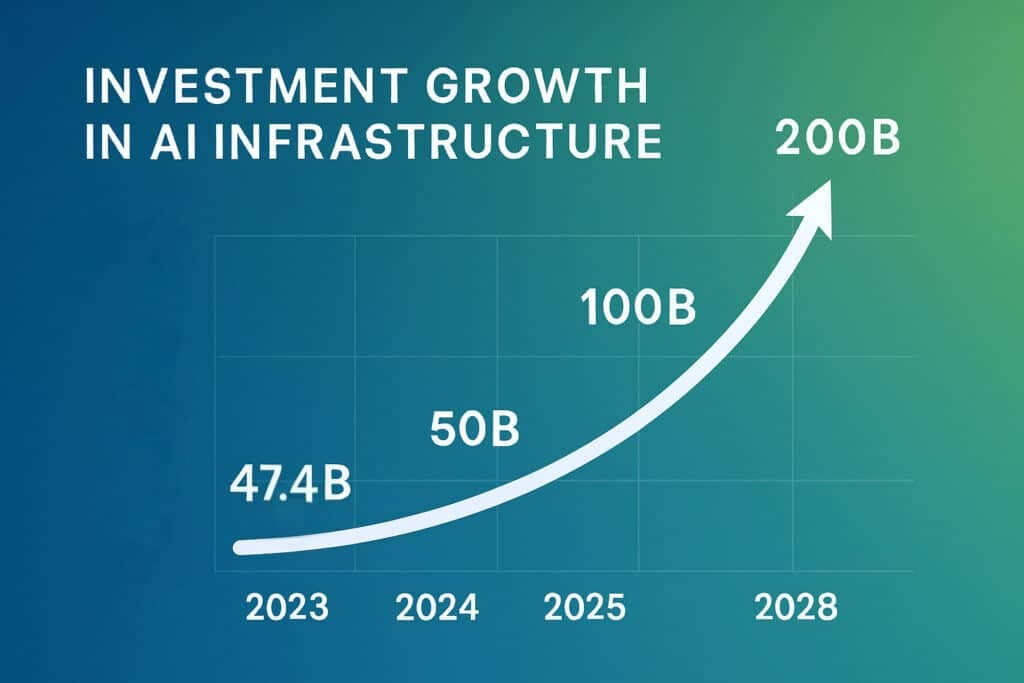

Nvidia has joined forces with six major Wall Street investment firms to mobilize $500 billion in financing for AI infrastructure and data center construction. This initiative seeks to establish high-performance computing hardware as a new, bankable asset class, shifting the funding burden away from individual corporate balance sheets.
An Evolving Approach to Capitalizing AI
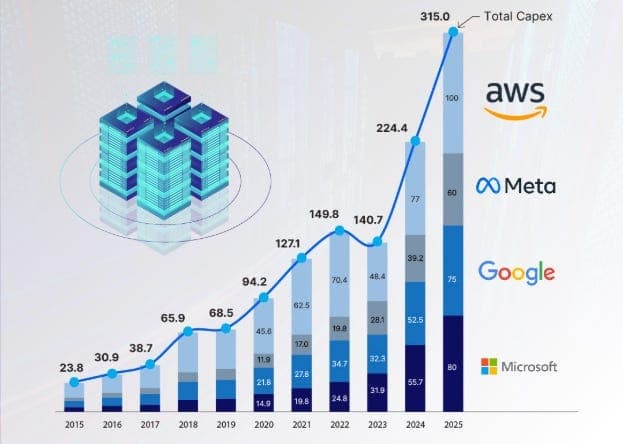
Nvidia CEO Jensen Huang has unveiled a strategic partnership with some of the world's largest financial entities to address the massive capital requirements of the artificial intelligence boom. By establishing memorandums of understanding with Apollo, Blackstone, BlackRock, Brookfield, Goldman Sachs, and KKR, Nvidia aims to unlock $500 billion in third-party capital. This initiative is designed to treat AI compute resources—specifically GPUs and the data centers housing them—as a formal, investable asset class similar to real estate or essential utility infrastructure. Huang argues that because these systems generate consistent revenue and are fungible across different users, they possess the long-term, stable characteristics required to support institutional financing. The goal is to move beyond relying solely on the corporate balance sheets of hyperscalers, which have faced increasing pressure as capital expenditures for AI projects continue to scale into the hundreds of billions.
Technical and Operational Integration
Under this framework, Nvidia acts as a nexus, connecting customers with the necessary infrastructure financing partners. A unique feature of this plan is Nvidia's commitment to backstop up to 25% of individual loans, a measure intended to lower interest rates and improve financing terms for borrowers who might otherwise be constrained by their own credit profiles. Additionally, the financing agreements require borrowers to utilize system architectures specified by Nvidia. These standardized configurations are designed to ensure that if a borrower defaults or faces operational failure, the hardware and software stack remains interoperable and easily transferable to another operator. This design seeks to protect the value of the 'asset' throughout its lifecycle, which Huang notes can be extended through Nvidia’s CUDA software optimizations. By packaging these systems as financeable assets, the participating banks hope to create a market for credit backed by compute power.
Financial Engineering and Market Risks
While the scale of the investment has been met with enthusiasm from the partner firms, the financial structure has drawn comparisons to historical market shifts. BlackRock CEO Larry Fink explicitly likened the initiative to the early days of the mortgage-backed securities market in the 1970s, suggesting that securitizing digital infrastructure represents the next frontier of financial engineering. However, the proposal does not exist in a vacuum of optimism. Skeptics and short-sellers have raised concerns regarding the longevity and depreciation of AI chips. There is ongoing debate about whether these chips can retain significant market value as newer, more efficient hardware generations are released. Some financial analysts have warned that the industry may face inevitable pullbacks and excesses. The participating financiers acknowledge these risks, noting that while the project intends to pool and diversify risk, there will still be winners and losers as the sector matures.
Broader Industry Impact
The announcement comes at a pivotal time for the tech sector, which has collectively spent more than $1 trillion on AI projects over the last three years. With major companies like Alphabet, Microsoft, and Meta reporting heavy spending that has occasionally pressured free cash flow, the ability to access external credit markets could be transformative. This financing push essentially treats the physical hardware required for large-scale AI as a piece of mission-critical global infrastructure, much like fiber-optic cables or power grids. By creating a structure for debt and equity financing, Nvidia is attempting to ensure that the rapid pace of compute deployment is not slowed by corporate financial limitations. As infrastructure demand continues to outstrip supply, this partnership signals a long-term commitment to maintaining the current pace of data center construction, manufacturing expansion, and the broader integration of AI agents into the global economy.
⚖ The Balanced View
Supporting view
Proponents, including executives from Goldman Sachs and KKR, argue that AI compute has become a core utility and a revenue-generating, long-lived asset class capable of supporting securitized debt.
Concerns & criticism
Critics and short-sellers, such as Michael Burry, have expressed concerns that companies may be overestimating the useful lifespan of current AI chips and that the rapid pace of innovation could lead to premature hardware depreciation.
→What's next
Nvidia and its financial partners are expected to continue working through the specific details of loan structures, interest rates, and individual credit agreements. While memorandums of understanding have been signed, future contracts will determine how quickly this $500 billion pool of capital is deployed into active data center and factory projects.