
Scientists have detected a mysterious, highly energetic object dubbed MoM-BH*-1 that appears to be a black hole wrapped in a thick, luminous gas envelope. This discovery could explain the prevalence of unexplained red spots observed in the early universe by the James Webb Space Telescope.
The Identification of MoM-BH*-1
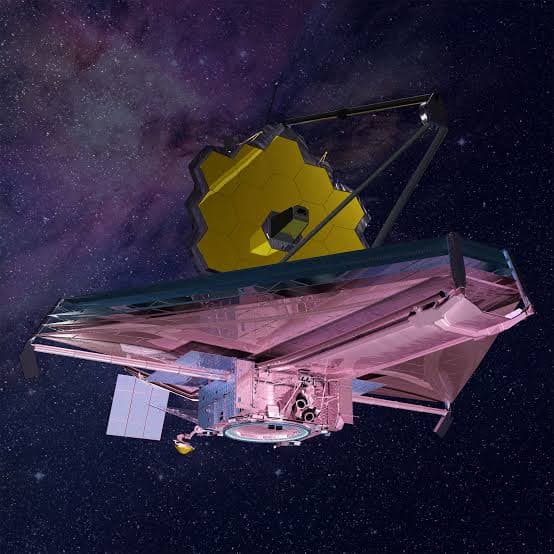
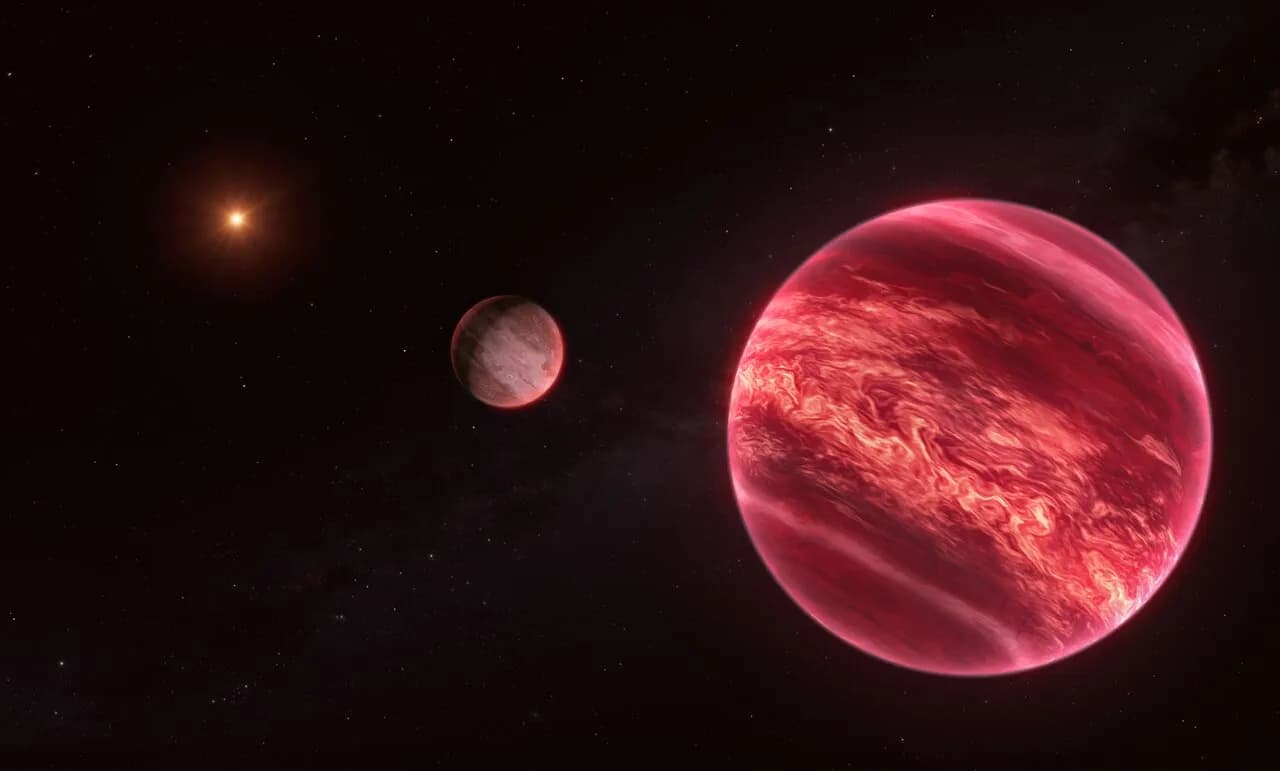
A research team utilizing data from the James Webb Space Telescope (JWST) has identified a unique celestial phenomenon designated as MoM-BH*-1. While initially appearing to be a colossal star due to its luminosity and reddish hue, the object exhibits physical properties that defy standard stellar evolution models. Situated in an era roughly 660 million years after the Big Bang, the object emits an extraordinary amount of energy—approximately 100 billion times the capacity of a typical star powered by nuclear fusion. Observations reveal that a significant portion of its light is abruptly absorbed, an effect far more intense than atmospheric absorption seen in known stars. This lead researcher Rohan Naidu and his colleagues suggest that the light is being obscured by an incredibly dense concentration of gas, indicating that the object might be a 'black hole star'—a central black hole actively consuming surrounding matter while encased in a massive, glowing gas shell.
The Black Hole Star Hypothesis
The concept of a black hole star serves as a compelling theoretical framework for understanding the nature of MoM-BH-1. Unlike standard stars, where energy is generated through nuclear fusion, the energy produced by this object likely stems from the gravitational and frictional heating of matter being pulled into a central black hole. This energy must then travel through a thick shroud of surrounding gas before reaching space. During this passage, the light acquires spectral signatures that mimic conventional starlight, which explains why the object was initially confused with a giant star. According to the research published in Nature, this specific configuration allows the black hole to effectively outshine its host galaxy. This makes MoM-BH-1 an exceptional case study, as it provides a rare, unobstructed view of this exotic process, separate from the light typically emitted by a galaxy's aggregate star population.
Addressing Early Universe Anomalies
One of the most persistent mysteries facing modern astrophysics is the frequent detection of small, reddish light sources in the early universe by the JWST. These objects have historically been difficult to categorize, as they do not conform to existing models of galaxies or stars. Researchers have proposed several competing hypotheses to explain these spots, including compact galaxies packed with stars, black holes masked by dust, or entirely new types of objects that do not exist in the contemporary cosmos. The identification of MoM-BH-1 provides significant evidence that many of these 'little red dots' may indeed be black hole stars embedded within early galaxies. Because MoM-BH-1 appears to be essentially devoid of competing light from its host, it serves as a critical bridge in understanding how black holes may have influenced the appearance and composition of the nascent universe shortly after its formation.
⚖ The Balanced View
Supporting view
The black hole star hypothesis successfully accounts for the extreme energy output and unique light absorption patterns that cannot be explained by standard stellar fusion models.
Concerns & criticism
These objects remain theoretical and sit alongside several other possibilities, such as compact galaxies or dust-shrouded black holes, which continue to be investigated as potential explanations for red spots in the early universe.
→What's next
Astronomers intend to continue monitoring JWST data for additional examples of these luminous, red-shifted objects. Future studies will likely aim to refine the models of how black hole stars interact with and potentially dominate their host galaxies in the earliest epochs of time.