
President Trump has announced a new series of tariffs reaching up to 100 percent on drones and aircraft parts imported into the United States. This executive action aims to bolster domestic manufacturing and address national security concerns related to foreign-made hardware.
Scope of the New Trade Measures
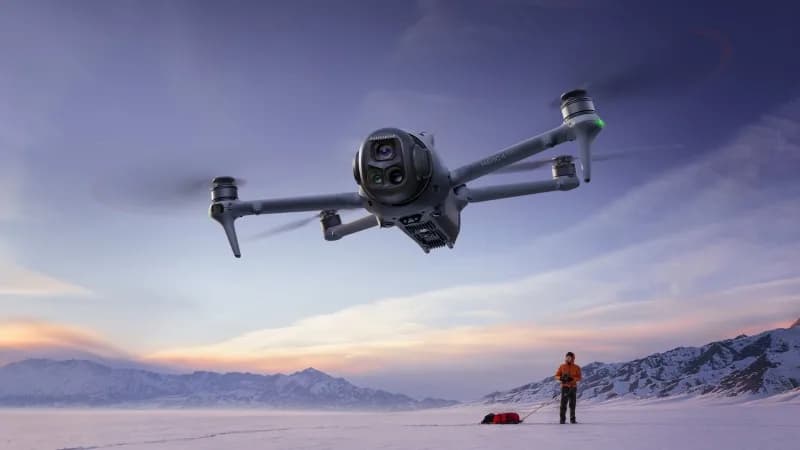
The White House has enacted a tiered tariff structure that significantly impacts the importation of unmanned aerial systems (UAS) and related components. Under the new policy, any drone equipped with thermal imaging technology, units weighing more than 25 kilograms, or devices featuring automated docking stations are subject to a 100 percent import levy. This also covers any associated parts for the heavy-duty drone category. Smaller devices, including lightweight consumer models under 250 grams, face a 25 percent tariff. There is, however, a strategic allowance for specific international partners; the UK faces a 10 percent rate, while the EU, Japan, Liechtenstein, South Korea, Switzerland, and Taiwan are subject to a 15 percent rate, provided that their hardware and software technology primarily originates within their own borders and the United States.
Rationale and Security Concerns
The administration's justification for these tariffs centers on both national security and economic autonomy. The official proclamation cites a dangerous over-reliance on foreign entities for critical drone components—such as lithium-ion batteries, motors, and electronic speed controllers—which officials claim creates vulnerabilities during military conflicts. Furthermore, the government alleges that current foreign-made drones pose an information technology security risk because software may transmit data back to manufacturers located abroad. Officials are also concerned that the domestic U.S. industry currently lacks the speed and manufacturing scale required to sustain national security operations or remain economically competitive against dominant foreign players like China, which currently leads the market in drone technology and infrastructure.
Incentivizing Domestic Production
A key component of this executive action is the effort to encourage the 'on-shoring' of the drone industry. To bridge the gap between current market reality and national goals, the administration is empowering the Secretary of Commerce to develop incentive programs for domestic firms. These initiatives are intended to foster new investment in local production facilities, aiming to move assembly and manufacturing away from foreign-dependent supply chains. By establishing a loophole that allows companies to bypass tariffs if they commit to domestic production, the White House intends to close existing gaps that previously allowed firms to import parts from China for final assembly within U.S. borders. This shift is viewed as necessary to build the localized supply chains and engineering knowledge pools that the current U.S. market lacks compared to global competitors.
Industry Impact and Legal Precedent
The sudden introduction of these tariffs has left industry experts and operators navigating a volatile landscape. Observers note that these costs are typically passed down from vendors to the end-users, affecting everyone from agricultural workers using crop-sprayers to first responders and search-and-rescue teams. Furthermore, there is a historical pattern of legal pushback regarding these measures. Earlier this year, both the Supreme Court and the U.S. Court of International Trade ruled that previous global tariffs imposed by the President were illegal. Despite these judicial setbacks, the administration has continued to issue new proclamations. Critics suggest that even if the courts were to invalidate these specific levies, everyday consumers are unlikely to receive any form of reimbursement, as companies rarely pass along refunds or lower prices once they have been adjusted to reflect the higher cost of goods.
⚖ The Balanced View
Supporting view
Proponents argue that the tariffs are a vital tool for securing national infrastructure, ensuring that sensitive data is not harvested by foreign manufacturers and guaranteeing that the U.S. retains the manufacturing capacity needed for national security contingencies.
Concerns & criticism
Critics point out that the U.S. lacks the localized supply chains and specialized engineering expertise required to replace Chinese manufacturers, and warn that these costs will inevitably burden critical industries like agriculture and emergency services.
→What's next
The impact of these tariffs will likely depend on how effectively the government's new incentive programs can stimulate domestic manufacturing in the coming months. Simultaneously, observers expect further legal challenges, as similar presidential trade actions have faced significant resistance in the U.S. court system previously.