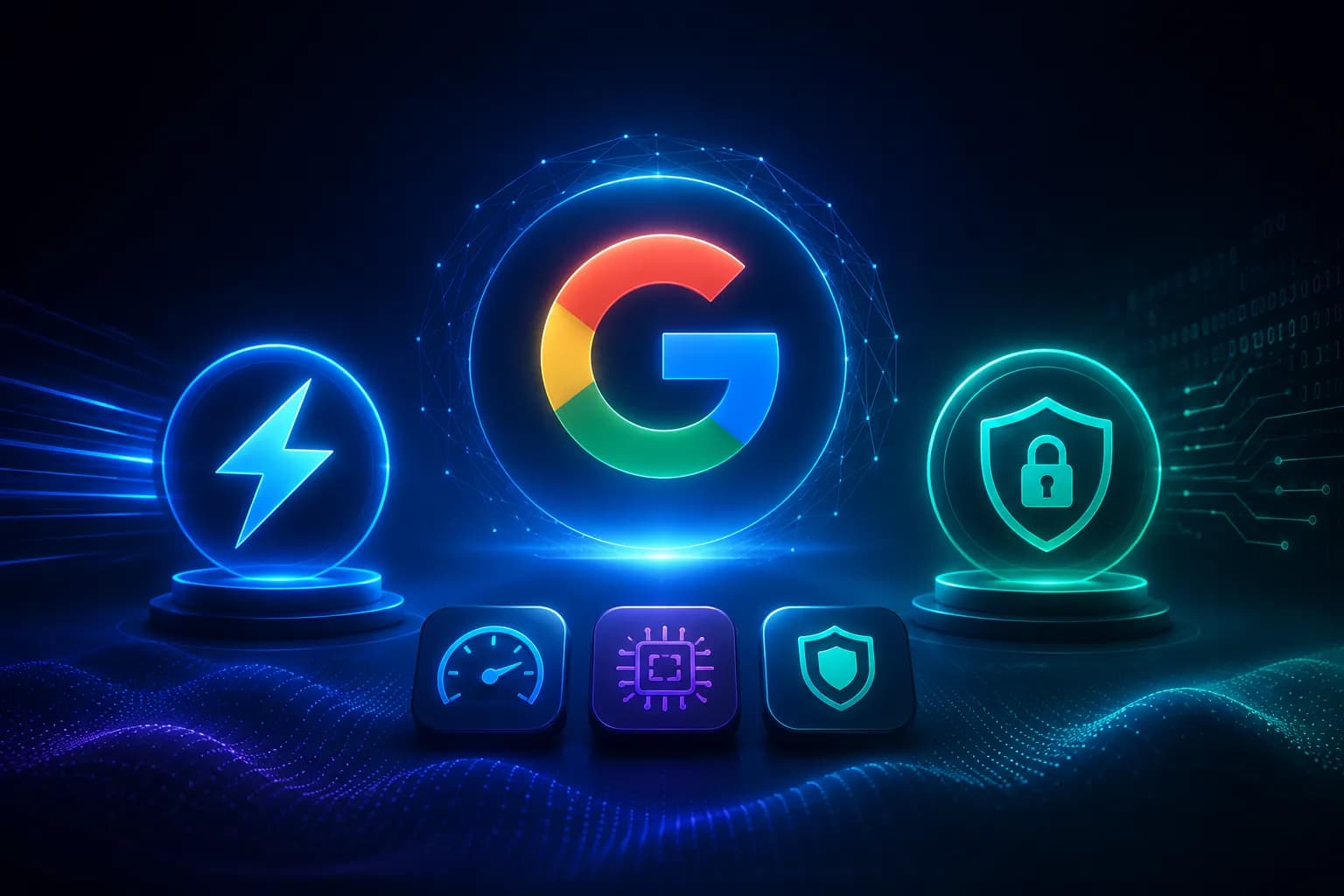

Google has officially introduced its 2026 hardware lineup, including the Pixel 11 smartphone series, the Pixel Watch 5, and the new Pixel Tag location tracker. The devices are heavily focused on on-device AI capabilities through the Tensor G6 chipset and expanded Gemini functionality.
Pixel 11 Hardware and Design Refinements
The Pixel 11 series continues Google’s design language while introducing several structural adjustments. A notable change involves the rear camera bar, which has been thinned by over 40% on the standard model and now features an all-glass surface across the device width. Google has eliminated the metallic inlay and temperature sensor found in previous iterations. On the Pro models, durability is a primary focus; these devices incorporate an improved anti-scratch display coating that the company claims is twice as resistant as the Pixel 10 Pro. The Pro models also feature a new 'HiLight' notification system, consisting of an RGB LED ring integrated into the flash assembly, which illuminates during Gemini interactions or when receiving calls from specific contacts. Conversely, battery capacities for the new flat-screen models have slightly decreased, despite Google maintaining its promise of '24+ hours' of battery life. The Pixel 11 Pro Fold has also seen a physical reduction, shedding approximately 10% in weight and 1mm in thickness, with a revised hinge and glass-fiber back panel for added structural integrity.
AI Integration and Performance Upgrades
Google’s 2026 release is deeply intertwined with the Tensor G6 chipset, which reportedly offers a 20% boost in power efficiency. While specific technical specifications for the chip remain limited, Google claims the processor enables 25% faster web browsing and 15% faster application loading times. Central to the software experience is 'Rambler,' a voice-processing feature designed to handle natural, unstructured human speech by smoothing out filler words and run-on sentences. Accessibility is further bolstered by an expansion of 'Live Transcribe,' which now supports American Sign Language, allowing the Pixel Camera to translate hand signs into text in real-time. New camera software, such as 'Camera Looks,' permits users to embed custom aesthetic styles directly into the HDR+ processing pipeline. Additionally, 'Magic Capture' aims to reduce shutter-press anxiety by automatically recording a high-quality video alongside stills, allowing the phone’s AI to identify the optimal moment, crop the frame, and eliminate blur.
Pixel Watch 5 and Health Monitoring
The Pixel Watch 5 focuses on incremental improvements, retaining the aesthetic of its predecessor while upgrading performance. Powered by the Qualcomm Snapdragon W5 Gen 2 Accelerated processor, the watch is roughly 20% faster, a performance increase utilized primarily for offline Gemini tasks like timer management and workout tracking. While the wearable lacks new physical health sensors, Google has introduced software-driven health insights that utilize pulse and movement data to estimate blood pressure trends and insulin sensitivity. These features are not limited to the new watch, as Google confirmed they will roll out to the Pixel Watch 3, 4, and Fitbit Air later this year. The 41mm model starts at $399, while the 45mm version is priced at $429. Additionally, Google announced a special Stephen Curry edition of the watch retailing for $579, featuring a specialized design optimized for athletic training routines.
Expansion into Bluetooth Tracking
Google has officially entered the item-tracker market with the Pixel Tag, a direct competitor to products like Apple’s AirTag. Priced at $29 individually or $99 for a four-pack, the device integrates with the Android Find Hub network. Unlike some competitors, the Pixel Tag utilizes ultra-wideband technology available in the Pro-series Pixel phones to provide precise location tracking when the user is in close proximity to the item. The tag can be located using the Find Hub application on a smartphone, or through the Pixel Watch. Furthermore, users can employ voice commands via Pixel Buds to prompt Gemini to locate or ring the tag, providing an entirely hands-free finding experience. While the phones are available for pre-order immediately, the Pixel Tag is slated for a delayed release on November 11, reflecting the ongoing rollout of the Find Hub network, which has historically trailed the adoption of Apple’s Find My ecosystem.
⚖ The Balanced View
Supporting view
Supporters appreciate the hardware refinements, such as the thinner camera bar and increased base storage of 256GB, as well as the advanced AI features like Rambler and Camera Looks that differentiate the Pixel software experience.
Concerns & criticism
Critics have highlighted the $100 price increase across the lineup and the decision to reduce battery capacity in the new models, noting that battery life remains a common complaint among existing Pixel users.
→What's next
Pre-orders for the Pixel 11 series and the Pixel Watch 5 are currently open, with devices scheduled to begin shipping to customers on August 20. The Pixel Tag is expected to arrive later this year, with a scheduled launch date of November 11.