
Flock Safety has developed a new AI-powered platform for law enforcement that can identify drivers and track movement patterns, potentially contradicting the company's long-standing public claims about its privacy protections. The system, known as OS Investigate, integrates various police and commercial databases to turn license plate data into detailed dossiers on individuals.
The Evolution of Flock’s Surveillance Capabilities
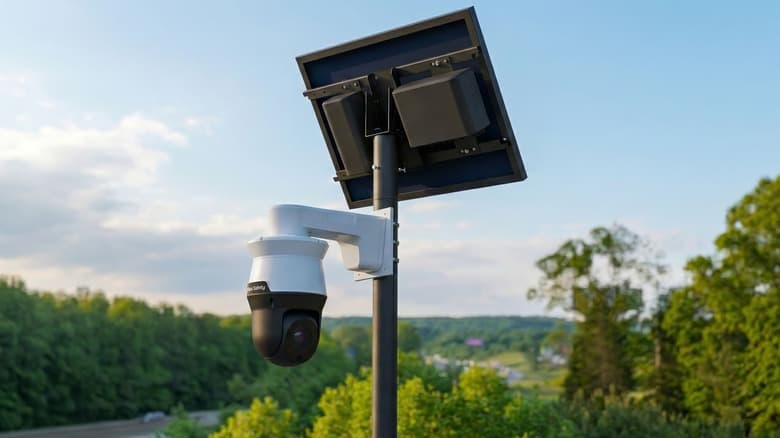
For years, Flock Safety maintained that its camera network served a narrow purpose: logging license plates to assist police in locating specific vehicles linked to criminal investigations. The company’s public-facing materials emphasized that its technology did not possess the capability to identify or track individual drivers. However, internal code discovered by reporters indicates the development of an artificial intelligence tool, OS Investigate, which significantly expands these capabilities. This software allows law enforcement to move beyond searching for a single known plate. Instead, the AI can analyze thousands of camera logs to establish patterns of life, identifying which vehicles frequently visit specific neighborhoods, mapping the movements of associates, or even flagging vehicles based on suspicious behaviors like late-night travel between specific types of businesses. By pulling in data from 911 dispatch logs, arrest records, and commercial databases containing sensitive personal information, the system transforms a simple license plate sighting into a detailed profile, potentially including home addresses, phone numbers, and relative information.
Technical Operation and Search Prompts
The OS Investigate platform features a repository of 69 prewritten prompts that guide officers in querying the system. These tools enable complex data synthesis, allowing police to request reports on people based on nothing more than their physical presence in an area over a set timeframe. For instance, the system can generate a list of individuals who have been arrested multiple times within a two-year period, map their residences, and analyze dispatch logs associated with their homes. Another feature allows for a 'workup' that aggregates commercial data and police records to build a comprehensive dossier on an individual. The system is designed to automatically filter out commercial transport, such as buses or delivery vans, to isolate the movements of private citizens. This allows officers to identify 'witnesses' or 'associates' based on their proximity to a target, regardless of whether those individuals are officially suspected of a crime.
The Pawtucket Whistleblower Controversy
The public awareness of Flock’s expanding surveillance footprint was brought to the forefront by Noel Pichardo, a former police officer in Pawtucket, Rhode Island. After noticing an increase in unfamiliar cameras installed around his jurisdiction without significant public or legislative debate, Pichardo grew concerned about the privacy implications of a permanent, city-wide tracking network. Despite the risks to his career, he spoke to local media to challenge the department's opaque deployment process. His decision to break ranks drew sharp criticism from police leadership, leading to a period of administrative conflict, disciplinary action, and his eventual resignation. Pichardo’s experience highlighted a recurring issue with the adoption of surveillance technology: the tendency for agencies to install such systems under the guise of administrative necessity, often bypassing public oversight or municipal council votes until the infrastructure is already fully operational.
Broader Implications and Industry Context
The introduction of OS Investigate arrives during a period of intense scrutiny for Flock Safety. The company faces bipartisan political concern regarding the warrantless collection of mass movement data, alongside reports of officers using existing platforms for non-official purposes. This has prompted a wave of backlash, characterized in some regions by physical vandalism against the company's camera infrastructure. While Flock argues that OS Investigate is a separate product still in the testing phase, privacy advocates suggest that the tool’s existence fundamentally challenges the narrative that these systems are limited to case-based investigations. Experts warn that the ease with which these AI-driven searches can now be performed creates a system where the threshold for 'reasonable suspicion' is effectively lowered, as the software can generate leads from mass-collected data without requiring an existing criminal link or active investigation, drawing comparisons to invasive surveillance architectures used in other parts of the world.
⚖ The Balanced View
Supporting view
Some law enforcement personnel argue that these AI tools are essential for modern policing, providing a powerful, efficient means to solve property crimes and vehicle thefts using available data to identify potential suspects.
Concerns & criticism
Privacy advocates and former officers warn that the technology represents an unprecedented expansion into mass surveillance, allowing the government to track the routines of ordinary citizens and identify 'associates' without adequate legal justification or public debate.
→What's next
Flock Safety has indicated that the capabilities of OS Investigate are still under development and subject to change prior to a wider commercial release. It remains to be seen how the company will address the bipartisan political pressure and public privacy concerns raised by the discovery of these advanced search tools.