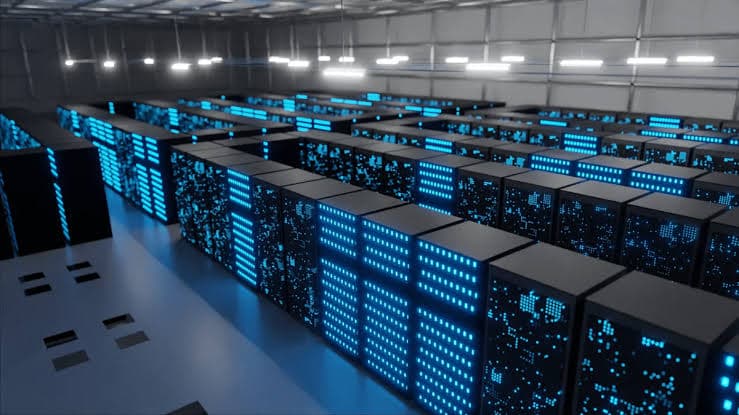

Nvidia is investing $1.5 billion into developer SB Energy and extending up to $105 billion in credit to facilitate the construction of a massive, multi-gigawatt AI data center for OpenAI in Pike County, Ohio. This project, slated to come online in phases starting in 2028, aims to anchor OpenAI's future computing capacity through exclusive access to Nvidia hardware.
Strategic Financial Commitment
Nvidia has solidified a major strategic move to guarantee its position as the exclusive compute provider for OpenAI’s new facility in Ohio. By investing $1.5 billion directly into SB Energy—a developer backed by SoftBank and OpenAI—Nvidia is securing deep integration into the project's development. Beyond this equity stake, the company is facilitating a massive credit line of up to $105 billion to support the physical construction of the data center. This capital injection underscores Nvidia’s broader strategy of acting as both a hardware supplier and a financial backer for the industry’s most ambitious AI infrastructure projects. The arrangement ensures that the PORTS-Pike Technology Campus will be powered by Nvidia’s proprietary compute technology, a move CEO Jensen Huang described as a necessity for building the next generation of productive AI factories.
Technical Scope and Timeline
The proposed facility is set to be a monumental piece of infrastructure, beginning with an initial computing capacity of 4.25 gigawatts. Design plans include a scalable architecture that allows for an eventual expansion to 8 gigawatts of total capacity. Operation is expected to commence in incremental phases beginning in 2028. To support this immense power draw, SB Energy will construct a 9.2-gigawatt natural gas power plant on land formerly managed by the U.S. Department of Energy, which holds historical significance for its past role in uranium enrichment. Furthermore, the plan includes a $4.2 billion investment into regional grid upgrades. This project serves as a clear indicator of the scale required to sustain modern, large-scale artificial intelligence models, with OpenAI leadership emphasizing that compute capacity is increasingly viewed as the fundamental resource of the modern era.
Historical and Regional Context
The selection of the PORTS-Pike site is notable due to its history as a former federal industrial complex once used for the U.S. nuclear arsenal and naval submarine operations. Repurposing this land for high-tech AI infrastructure represents a significant industrial transition for Pike County. The project is expected to act as a major local economic catalyst, with projections indicating the creation of 35,000 construction-related jobs through 2032 and an additional 2,500 permanent operational roles. However, the sheer size of the project also presents challenges. The cost of natural gas power plants has spiked 66% over the last two years, driving the project's estimated $33 billion energy cost. This scale of development has triggered concerns regarding regional energy security, as the plant will compete directly with natural gas export markets, potentially driving up costs for the broader public.
Industry Implications and Financing Trends
This deal is the latest in a series of aggressive financial maneuvers by Nvidia intended to accelerate the global AI data center buildout. Nvidia has recently partnered with several large asset managers to create financing platforms tasked with deploying $500 billion in third-party capital. While these efforts are aimed at accelerating AI capabilities, they have invited scrutiny regarding the nature of the industry's growth. Financial analysts have raised questions about 'circular financing' in the AI sector, where heavy investments from large tech firms into infrastructure, and back into each other, create complex interdependencies. Despite these concerns, companies involved argue that such investments are essential to building the long-lived, high-end infrastructure required for future AI evolution. This deal remains a primary example of how the largest players in the tech space are leveraging their cash reserves to fundamentally reshape the underlying energy and compute landscape.
⚖ The Balanced View
Supporting view
Proponents, including OpenAI leadership, argue that this infrastructure is vital for the industry, treating compute as a foundational resource that enables future innovations and more efficient AI models.
Concerns & criticism
Critics and industry observers have noted the risks of circular financing and highlighted that the massive energy requirements of these facilities could drive up natural gas prices through competition with export markets.
→What's next
The project will now move into the construction phase, with the initial 4.25 gigawatts of compute capacity expected to come online in phases starting in 2028. Observers will monitor whether the promised job creation and regional grid investments proceed as scheduled given the volatile costs associated with natural gas power generation.