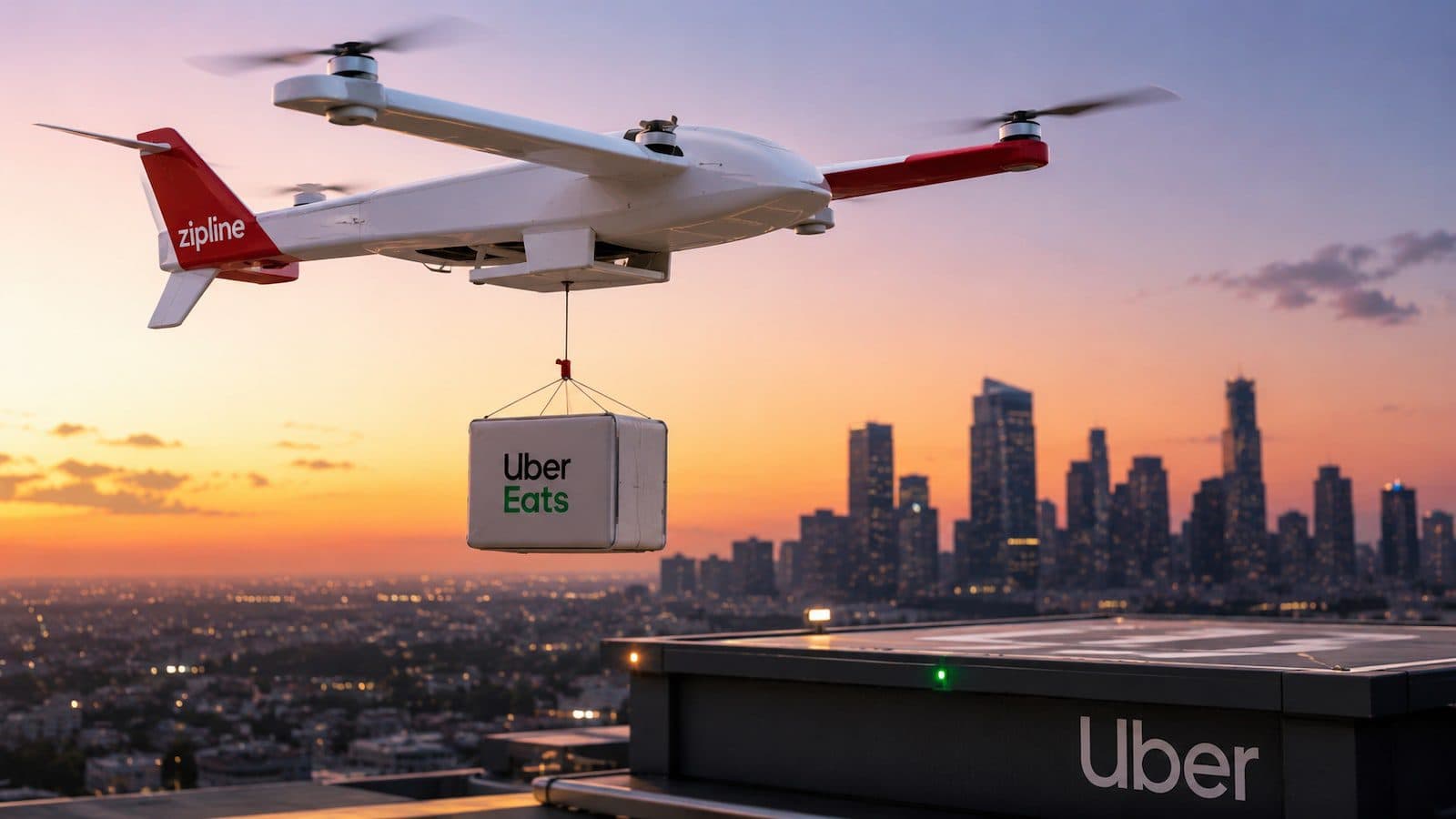

Uber has entered a strategic partnership and investment deal with Zipline to incorporate drone technology into its Uber Eats platform. The companies intend to begin operations in existing markets this year, with an ambitious goal of reaching one million daily drone deliveries by the end of 2029.
The Strategic Partnership
Uber is significantly bolstering its logistics capabilities through a new partnership with drone-delivery specialist Zipline. By integrating Zipline’s autonomous fleet into the Uber Eats ecosystem, Uber aims to drastically accelerate delivery times, estimating that orders could be completed in as little as five to ten minutes. While the specific financial terms of Uber’s investment into Zipline remain undisclosed, the deal represents a major commitment to autonomous logistics. This move is part of Uber's broader strategy to diversify its delivery methods as it seeks to capitalize on the growing demand for rapid commerce. The collaboration will first launch in regions where Zipline already maintains an established presence, such as the Dallas-Fort Worth metro and Pea Ridge, Arkansas, before aiming for a wider expansion into dozens of U.S. cities over the coming years.
Uber's Evolving Logistics Model
Uber’s current business strategy hinges on acting as a massive platform for various autonomous technology providers rather than attempting to build all necessary hardware in-house. This represents a significant shift from the company’s past, during which it operated divisions like Uber Elevate and the Autonomous Technologies Group. Having divested those internal programs, Uber has pivoted toward a model of strategic investment, committing over $10 billion to a wide array of autonomous technology vendors. By inviting multiple partners, such as Zipline and the previously announced Flytrex, onto its app, Uber aims to maintain its dominance in food and retail delivery. This platform-agnostic approach allows the company to remain at the cutting edge of delivery technology without the high operational costs associated with developing complex, proprietary drone or robotaxi software and hardware from scratch.
Market Context and Competition
The drone delivery sector is rapidly becoming a competitive arena as major players vie for dominance in last-mile logistics. Zipline, which has successfully completed over 2.7 million deliveries across various sectors including healthcare and food, enters this agreement as a seasoned operator. However, the path to market saturation is crowded; Uber faces stiff competition from platforms like DoorDash, which has been collaborating with Wing for drone services since 2022. Wing has already demonstrated its own growth, recently expanding its service area into the Atlanta metropolitan region. As Uber and Zipline move forward, their ability to execute at scale will be tested against these established industry incumbents. Furthermore, the broader autonomous vehicle industry faces ongoing friction regarding regulatory landscapes, adding a layer of complexity to the rapid deployment of these aerial delivery systems across densely populated urban environments.
Broader Challenges for Uber
While the Zipline partnership is framed as a growth engine for Uber Eats, the company's track record with autonomous partnerships is not without turbulence. Uber is navigating a high-profile disagreement with Waymo, a conflict that is expected to result in the termination of their partnership when current contracts expire in 2028. This tension underscores the volatility of the autonomous space, where stakeholders often clash over regulatory standards and market control. Despite these friction points, leadership at Uber remains optimistic about the efficiency gains drones provide. CEO Dara Khosrowshahi has characterized the expansion into quick-commerce as a potential “tailwind” for the company’s future growth, suggesting that speed is the critical differentiator in the next generation of food delivery. Successfully balancing these various high-stakes relationships with providers like Zipline will be essential for Uber to fulfill its ambitious delivery volume targets.
⚖ The Balanced View
Supporting view
Uber leadership believes that quick-commerce via drones creates an enormous growth opportunity that will significantly outperform traditional food delivery markets.
Concerns & criticism
Uber faces operational and regulatory challenges, including a deteriorating relationship with major partner Waymo and intense competition from services like DoorDash and Wing.
→What's next
The companies plan to begin rolling out drone-based Uber Eats deliveries in specific pre-existing Zipline markets by the end of 2026. Following this initial phase, the partners intend to scale their operations to include dozens of additional cities throughout the United States.