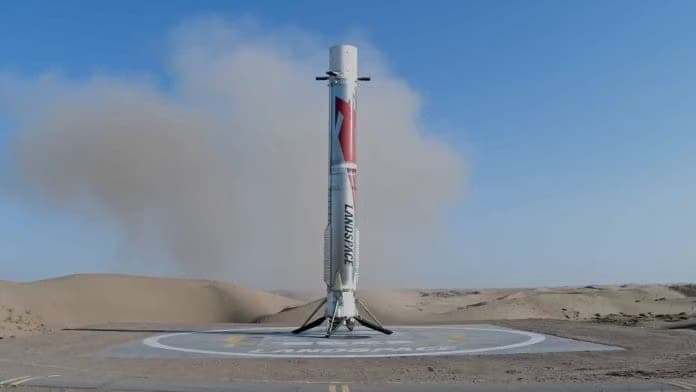

LandSpace has successfully executed a vertical landing of its Zhuque-3 rocket booster in northwestern China, marking the second time a Chinese company has recovered an orbital-class rocket. This achievement follows a recent breakthrough by a state-run entity, highlighting China's rapid acceleration toward reusable space launch capabilities.
A Significant Milestone for Commercial Aerospace
The landscape of global space exploration shifted further this week as LandSpace successfully landed its Zhuque-3 rocket booster in northwestern China. This accomplishment serves as a critical indicator of the country's maturing launch capabilities, coming only 40 days after the first-ever recovery of a Chinese orbital-class booster. That initial milestone was achieved in July by the Long March 10B, a rocket operated by a division of the state-owned China Aerospace Science and Technology Corporation (CASC). By demonstrating that a commercial entity—rather than just state-backed organizations—can successfully perform a propulsive landing, LandSpace has firmly cemented its position in the competitive space race, signaling that Chinese firms are rapidly closing the technical gap that once separated them from established Western pioneers like SpaceX.
Technical Progress and Early Struggles
The path to this week's success was marked by persistent engineering trial and error. Late last year, multiple Chinese companies initiated their first serious attempts at booster recovery, though none initially succeeded. LandSpace, specifically, conducted the inaugural test flight of the Zhuque-3 in December, but the vehicle failed to stick the landing after reaching orbit. Simultaneously, the Shanghai Academy of Spaceflight Technology attempted a similar recovery with the Long March 12A, which also resulted in a failure. These initial setbacks were viewed as standard challenges in the developmental lifecycle of reusable launch vehicles. The recent successes of both the state-run Long March 10B, which utilized a net-based retrieval system on an offshore platform, and the latest ground-based landing by LandSpace, demonstrate that these early technical hurdles are being systematically overcome.
Global Context and Industry Competition
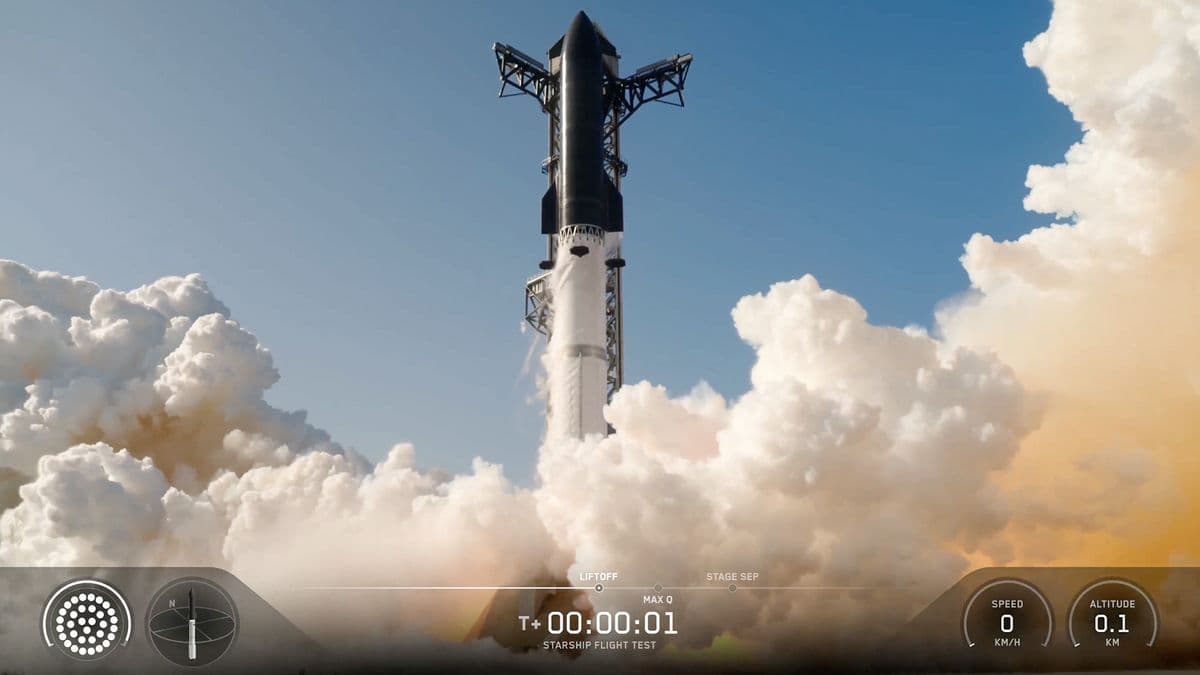
The international race for reusable rocket technology remains dominated by United States firms, most notably SpaceX, which pioneered propulsive landings with the Falcon 9 in 2015. While SpaceX has expanded its fleet with the Starship and Super Heavy, other American companies have taken significantly longer to follow suit. Blue Origin, for instance, required a decade of development following the initial SpaceX success before achieving its own orbital-class booster recovery. As China ramps up its own efforts, it maintains a dual-track strategy involving both commercial startups and massive, state-funded organizations like CASC. Looking ahead, several other US firms, including Rocket Lab, Stoke Space, Relativity Space, and Firefly Aerospace, are actively developing their own reusable systems, with several anticipated to reach flight testing within the next few years. The competitive pressure is clearly forcing an accelerated timeline for innovation across the globe.
⚖ The Balanced View
Supporting view
Supporters note that the rapid succession of successes by both CASC and LandSpace in just over a month demonstrates China's immense capacity for scaling and improving aerospace infrastructure in a very short timeframe.
Concerns & criticism
The primary industry concern remains the technical difficulty of achieving consistent, repeatable landings, as evidenced by the initial failures of the Zhuque-3 and Long March 12A late last year.
→What's next
Industry analysts expect more Chinese firms to continue testing launch and recovery sequences throughout the coming year. Future missions will likely focus on refining the landing precision and ensuring that these recovered stages can be refurbished and flown again reliably.