
Alibaba recorded a 75% drop in quarterly profits as the company funneled massive capital into its artificial intelligence infrastructure. While the cloud computing division continues to show strong growth, rising hardware costs and high spending have sparked investor concerns regarding future returns.
Financial Performance and AI Investment
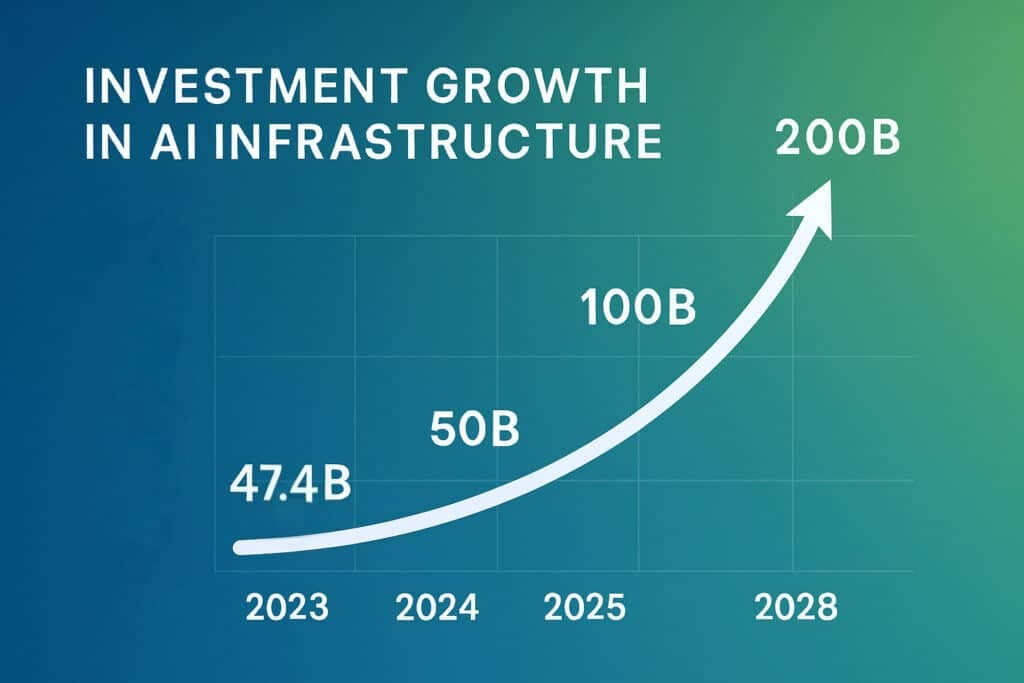
Alibaba’s latest financial results for the June quarter reflect the immense pressure of the ongoing artificial intelligence arms race. The Chinese tech giant reported a sharp 75% decline in profit, a development largely attributed to massive capital expenditure. Spending reached 67.7 billion Chinese yuan, or approximately $10 billion. Management cited several factors for this surge, including the irregular timing of customer acquisitions, a strategic push to expand CPU-compute capacity, and the elevated market prices for various chip components required for advanced data processing. Despite these heavy outlays, the company’s total revenue climbed to 268.95 billion yuan, narrowly beating analyst expectations of 268.88 billion yuan.
Cloud Division Growth and Monetization
A vital component of Alibaba’s business, the cloud division, remains central to the company’s long-term monetization strategy for artificial intelligence. This segment generated 48.4 billion yuan in revenue, marking a substantial 45% increase compared to the previous year. CEO Eddie Wu emphasized the company's commitment to its full-stack AI approach, asserting that this strategy positions Alibaba effectively to capture the rising global demand for AI compute resources. The company noted that revenue derived from AI-related products has sustained triple-digit growth for twelve consecutive quarters. This performance mirrors the approaches taken by Western tech giants like Microsoft and Google, who are similarly leveraging their cloud infrastructure as a primary vehicle for delivering AI-powered services to enterprise clients.
Market Strategy and Model Development
To maintain its competitive edge, Alibaba has accelerated the development and deployment of its internal AI models. Earlier this month, the company introduced Qwen3.8-Max, a model it describes as its most potent offering to date. Performance benchmarks shared by the company suggest that this model can match or occasionally outperform Anthropic's Fable 5. Furthermore, Alibaba is moving into the consumer space with the release of Qwen3.8-27B, an AI model engineered specifically to operate on consumer-grade hardware like laptops. By targeting the laptop market, Alibaba aims to tap into new areas for agentic tasks, professional research, and coding assistance, acknowledging the shift toward decentralized, edge-based artificial intelligence as a primary battleground for model developers.
Analyst Sentiment and Investor Concerns
The market reaction to Alibaba’s disclosures has been cautious, with shares trading 4.6% lower shortly after the market opened following the earnings report. While analysts at Citi expressed appreciation for the increased transparency regarding the performance of the company’s AI Labs and Applications segment, they also highlighted significant risks. The combination of a 75% rise in capital expenditure and negative free cash flow totaling 44.7 billion yuan has prompted questions about the sustainability of current investment levels. Investors are increasingly focused on whether these massive expenditures will yield adequate returns in the near future, particularly as Alibaba navigates a volatile landscape of rising chip prices and the need to scale expensive infrastructure to keep pace with global competitors.
⚖ The Balanced View
Supporting view
CEO Eddie Wu maintains that the company's full-stack strategy and sustained triple-digit growth in AI products place Alibaba in a superior position to capture long-term demand for artificial intelligence.
Concerns & criticism
Analysts at Citi have flagged the 75% jump in capital spending and the 44.7 billion yuan in negative free cash flow as major red flags that could compromise capital requirements and investment returns.
→What's next
Alibaba faces the ongoing challenge of balancing aggressive AI infrastructure investment with the need to satisfy shareholder expectations regarding profitability. Investors will be closely watching for signs that the significant capital outlay begins to transition into sustainable, positive free cash flow in the coming quarters.