
China has officially delayed its highly anticipated Chang'e 7 lunar mission, citing the need for absolute success after determining that launch conditions were not met. While no explicit cause was provided by officials, observers point to the presence of Typhoon Narra as a likely factor impacting the Wenchang spaceport.
Official Announcement and Mission Objectives
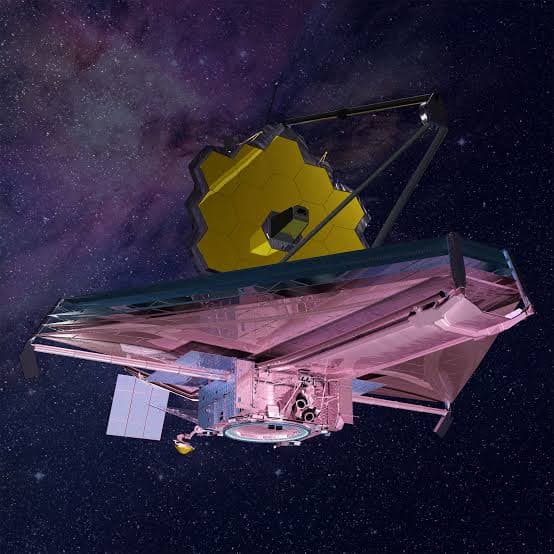
The Chinese Manned Space program issued a formal statement on Sunday confirming that the Chang'e 7 lunar mission would not proceed as originally scheduled. Officials emphasized a commitment to prudent and reliable operations, stating that the project failed to meet the necessary conditions for a successful launch during the current window. This mission is highly complex, comprising an integrated suite of lunar hardware including an orbiter, a lander, a surface rover, and a specialized mini-hopper probe. The primary objective is to reach the Moon's South Pole, an area of significant interest for its potential resources. By opting to delay, China’s space agency has prioritized the concept of 'absolute success,' choosing to push the launch into the coming year rather than risking the hardware during a period where pre-flight requirements were not fully satisfied.
Meteorological Challenges and Site Conditions
While the Chinese space agency did not identify a specific reason for the delay, weather conditions surrounding the Wenchang Space Launch Site on Hainan island provide a clear explanation. Typhoon Narra has been moving through the waters between the island and the Chinese mainland, producing wind speeds estimated at 45 mph—a strength comparable to a moderate tropical storm. Data from the Joint Typhoon Warning Center indicates the storm is projected to persist in the region for several days. It is highly plausible that Chinese mission planners concluded these adverse conditions would not dissipate in time to accommodate the narrow window required for a successful trajectory to the lunar South Pole. Because the Wenchang spaceport sits directly in the potential path of such weather systems, the decision reflects a conservative and safety-conscious approach to managing launch day volatility.
Logistics of the Extended Delay
Although the official announcement remained terse, reports and social media speculation suggest that the next viable launch window for Chang'e 7 might not materialize until February or March 2027. This significant gap is dictated by strict orbital mechanics and the physical constraints of the mission profile. The Chang'e 7 plan necessitates a lengthy 90-day reconnaissance phase while in lunar orbit before the craft can attempt a descent to the surface. Furthermore, the landing operations are heavily dependent on specific sunlight conditions at the lunar South Pole to ensure visibility and power generation. Combining these orbital requirements with the position of the Moon relative to Earth throughout the year effectively pushes the next possible launch opportunity several months into the future, illustrating why missing a single seasonal window necessitates such a prolonged postponement.
Technical Considerations and Rocket Reliability
Speculation regarding a last-minute technical fault has circulated, though official channels have offered no confirmation. Observers have noted that the Long March 5 launch vehicle utilizes the YF-100 engine, a component also featured in the Long March 7A rocket. A recent failure during the ascent of a Long March 7A mission just two weeks prior to the Chang'e 7 delay has prompted questions about systemic engine reliability. However, most analysts consider a technical flaw to be a secondary concern compared to the immediate threat posed by regional weather. Chinese teams had been moving forward with pre-launch preparations right up until the final announcement, suggesting that engineers were satisfied with the vehicle's readiness prior to the external pressure brought on by the approaching typhoon.
⚖ The Balanced View
Supporting view
The decision to prioritize 'absolute success' aligns with China's long-term strategy of cautious, methodical development in its space program, avoiding the high-stakes risks associated with launching during unstable weather.
Concerns & criticism
The delay highlights the vulnerability of the Wenchang launch site to seasonal tropical storms and suggests that reliance on specific engine designs, like the YF-100, may lead to increased scrutiny following recent launch failures in other programs.
→What's next
The Chang'e 7 mission is now expected to be rescheduled for a window in early 2027. Future efforts will likely focus on aligning the mission's 90-day lunar orbit requirement with favorable solar illumination at the lunar South Pole.