
NASA is scheduled to launch the Nancy Grace Roman Space Telescope on August 30 to investigate dark matter, dark energy, and the distribution of exoplanets. The mission will utilize a wide-field view to map cosmic structures and potentially revolutionize the current standard model of cosmology.
Mission Objectives and Scope
The upcoming deployment of the Nancy Grace Roman Space Telescope marks a pivotal shift in how NASA intends to observe the deep universe. Scheduled for liftoff from Kennedy Space Center as early as August 30, the observatory is designed to act as a expansive discovery machine. While the Hubble Space Telescope provided unprecedented clarity, the Roman telescope is distinguished by a field of view roughly 100 times larger. This massive observational capacity will allow astronomers to move beyond studying isolated regions, enabling them to map vast, sprawling swaths of space. By analyzing how dark energy accelerates the expansion of the universe and how dark matter constructs the underlying scaffolding of galaxies, researchers hope to move toward a fundamental understanding of cosmic mechanics. As NASA senior project scientist Julie McEnery notes, the telescope's unique capabilities make it an ideal tool for uncovering rare and surprising phenomena that current equipment simply cannot see.
Technological Synergies with James Webb
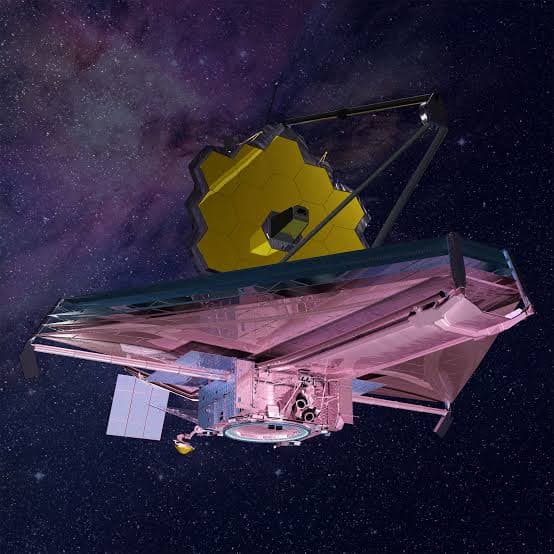
The Roman Space Telescope is being positioned as a strategic partner to the James Webb Space Telescope, though their specific technical roles remain distinct. Both platforms operate primarily in the infrared spectrum and will reside at Lagrange Point 2, a location nearly one million miles from Earth that facilitates ideal conditions for blocking interference from the sun, Earth, and moon. However, where Webb excels at peering into the deep, distant past of the universe through a narrow, focused aperture, Roman provides a panoramic vantage point. This wide-field configuration is essential for cataloging millions of stars and detecting planetary systems. By observing larger areas of the sky simultaneously, Roman can implement techniques like microlensing, which detects planets by measuring how their gravitational fields warp light from background stars. This synergy allows the two observatories to act as a comprehensive scientific suite, covering both high-resolution deep-space imaging and broad-scale cosmic mapping.
Revolutionizing Exoplanet Research
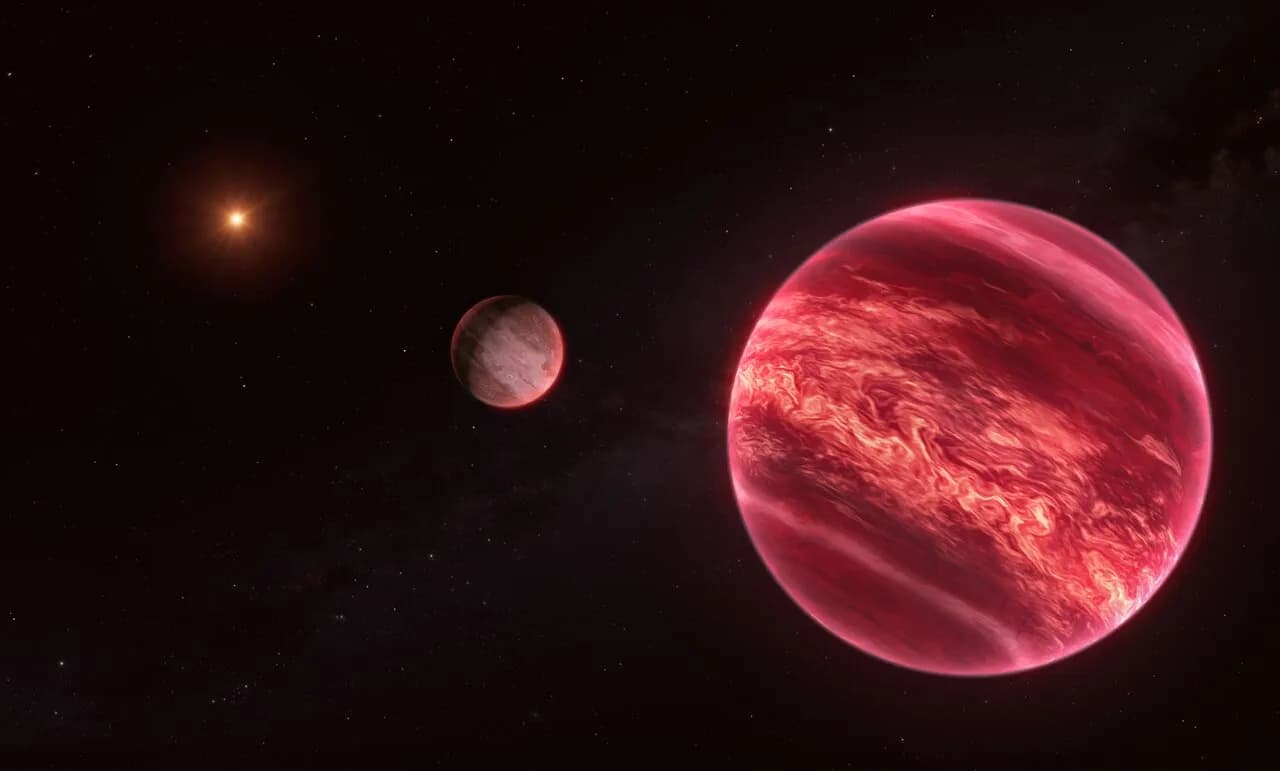
One of the most significant anticipated outcomes of the Roman mission is the expansion of our exoplanet catalog. Currently, humanity has confirmed approximately 6,300 exoplanets, a number that experts expect will grow by as many as 200,000 thanks to Roman’s sensitive detection methods. Beyond traditional transit techniques, which identify planets as they move in front of their host stars, Roman will employ gravitational microlensing to find worlds that are significantly farther from their host stars. This sensitivity extends to planets with less mass than Mercury, and even allows for the identification of rogue, free-floating planets drifting through the void. By creating a complete census of diverse planetary systems, researchers like Matthew Penny of Louisiana State University believe we can finally determine if our own solar system is a rare coincidence or a common occurrence. This data is critical for understanding the environmental conditions necessary to host life-bearing worlds like Earth.
Challenging Cosmological Models
The scientific community is currently grappling with several 'tensions' that suggest the standard model of cosmology may be incomplete. Recent observations have shown that the universe is expanding at a rate faster than initial models predicted, and that matter is distributed with a uniformity that defies current expectations. Furthermore, data from the Dark Energy Spectroscopic Instrument has suggested that dark energy might be losing strength over time. The Roman telescope is specifically designed to provide the high-precision data needed to confirm or refute these anomalies. By mapping tens of thousands of supernova explosions and tracing the distribution of dark matter via weak gravitational lensing, Roman will offer a clearer picture of how these cosmic structures evolve. If the expansion rate or the nature of dark energy deviates from current theories, the data gathered by the Roman telescope will be instrumental in rewriting our understanding of the universe's fundamental physics.
⚖ The Balanced View
Supporting view
Proponents view the Roman telescope as a necessary evolution in astronomy because its wide-field capability addresses specific data gaps that existing, narrower-focus telescopes cannot fill.
Concerns & criticism
The project faces the inherent challenge of studying dark energy and expansion, which are described by scientists as incredibly complex and difficult to measure with existing technology.
→What's next
Following its launch from Florida, the telescope will travel to its assigned orbit at Lagrange Point 2. Scientists will then begin a five-year mission to collect data that will be used to generate comprehensive maps of the cosmos and refine our models of planetary formation.