
NASA has officially cancelled its ambitious effort to boost the orbit of the aging Swift space observatory after the rescue spacecraft, LINK, encountered persistent control system issues. The telescope is now expected to continue its descent and burn up in the Earth's atmosphere before the end of the year.
The Life and Legacy of Swift
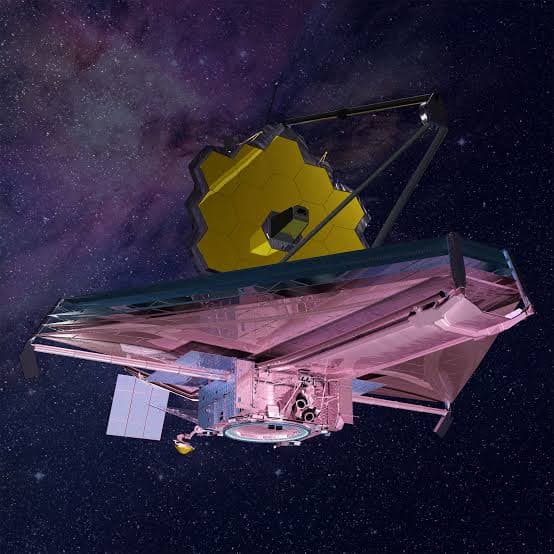
Launched in 2004 with an initial mission lifespan of just two years, the Swift space observatory has provided researchers with over two decades of critical data regarding gamma-ray bursts. These events represent the most powerful electromagnetic explosions known to exist in the universe. Despite its aging hardware, Swift remained a vital scientific asset, functioning far beyond its expected operational window. However, because it lacks an internal propulsion system, the telescope has been subject to steady orbital decay caused by atmospheric drag. Even though it resides hundreds of kilometers above the planet, the subtle interaction with particles in the upper atmosphere has slowly sapped its energy, inevitably pulling the observatory closer to Earth over time.
Escalating Risks and Atmospheric Drag
For years, NASA maintained models predicting that Swift could remain in a stable orbit well into the 2030s. This outlook shifted dramatically in 2024 when intense solar activity heated the upper reaches of Earth's atmosphere. This heating caused the atmosphere to expand, which significantly increased the drag forces acting upon the satellite. As the drag intensified, the descent rate accelerated, pushing the estimated timeframe for atmospheric reentry forward to late 2026. This sudden acceleration created a time-sensitive crisis for the agency, as the observatory faced the prospect of destruction within just a few years, necessitating a rapid response if the mission were to be saved.
The Attempted Robotic Rescue
In a bid to salvage the observatory, NASA initiated a complex, cinematic-style rescue mission. The plan relied on a robotic spacecraft developed by Katalyst Space Technologies, known as LINK, which was designed to rendezvous with Swift, capture the satellite using mechanical arms, and perform an orbital boost to a safer, higher altitude. LINK was launched on July 3, 2026, but the mission soon encountered severe technical hurdles. Shortly after deployment, the spacecraft developed critical faults in its attitude control system, which compromised the vehicle’s ability to remain stable and oriented in space. Despite weeks of intensive troubleshooting by engineering teams, the problems could not be adequately resolved to proceed with the planned capture.
Decision to Terminate the Rescue
On Wednesday, NASA administrator Jared Isaacman confirmed that the agency had opted to cancel the rescue mission. The decision acknowledges the limitations posed by the persistent failures within the LINK spacecraft’s control systems. While the primary objective of extending Swift's life is now off the table, the agency intends to keep the LINK spacecraft in proximity to the observatory to conduct demonstration exercises. These tests will focus on gathering data on rendezvous maneuvers and close-proximity operations. NASA hopes that even without a successful rescue, the technical experience gained from the mission will inform future attempts to repair, relocate, or extend the service life of other satellites, contributing to the broader development of orbital maintenance capabilities.
Future Outlook and Final Descent
With the rescue mission officially halted, Swift’s eventual destruction is inevitable. The observatory will continue to lose altitude until it reaches the dense, lower layers of the atmosphere. Upon entry, the intense aerodynamic forces and extreme heat will result in the total destruction of most, if not all, of the satellite's components. At this stage, NASA officials indicate that it remains impossible to pinpoint the exact time or geographic location of the final reentry. However, the agency maintains that the attempt was a necessary risk. Isaacman emphasized that NASA must be prepared to take smart, aggressive risks when the potential scientific return is sufficiently high, framing the mission as a valuable step forward in the evolution of space-based servicing.
⚖ The Balanced View
Supporting view
NASA administrators defended the project as a 'smart risk,' arguing that the potential to extend a long-running, scientifically productive mission justified the rapid, high-speed development approach.
Concerns & criticism
The mission was acknowledged as high-risk from its inception, partly because the Swift observatory was never engineered for orbital capture, and the rescue spacecraft was produced against an extremely tight deadline.
→What's next
The LINK spacecraft will continue to perform demonstration maneuvers to study proximity operations with Swift, providing data for future satellite service missions. Meanwhile, the Swift observatory will continue its gradual orbital decay until it eventually encounters the denser atmosphere for its final reentry before the end of 2026.