
OpenAI has introduced its first custom-designed AI processor, the Jalapeño, aimed at increasing inference efficiency and reducing dependence on Nvidia hardware. Developed in collaboration with Broadcom, the chip is expected to be integrated into OpenAI's infrastructure by the end of this year.
Strategic Pivot to Custom Silicon
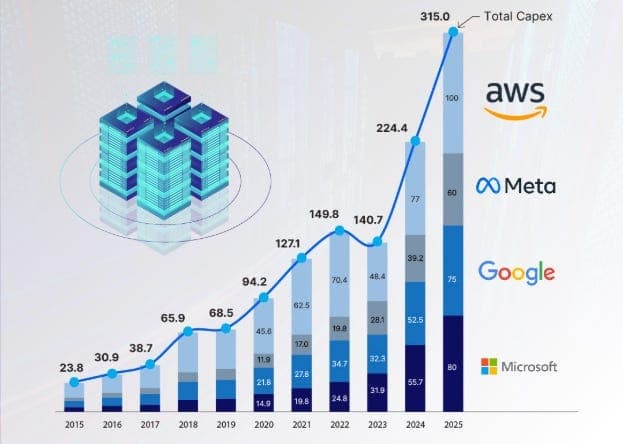
OpenAI has officially entered the semiconductor space with the announcement of its proprietary AI chip, the Jalapeño. Designed specifically to handle inference—the process by which AI models execute real-world tasks and provide responses—the chip marks a significant shift for the company. By moving away from a total reliance on off-the-shelf hardware, OpenAI aims to achieve superior speed and power efficiency, which are critical as the demand for responsive AI agents continues to surge. Analysts suggest that this move is a direct challenge to the current infrastructure model, which is heavily dominated by Nvidia's GPUs. By building internal capabilities, OpenAI joins a growing cohort of technology giants, including Google, Meta, and AWS, that are aggressively pursuing custom silicon to better control their technical and economic destinies within the rapidly expanding AI sector.
Technical Performance and Comparisons
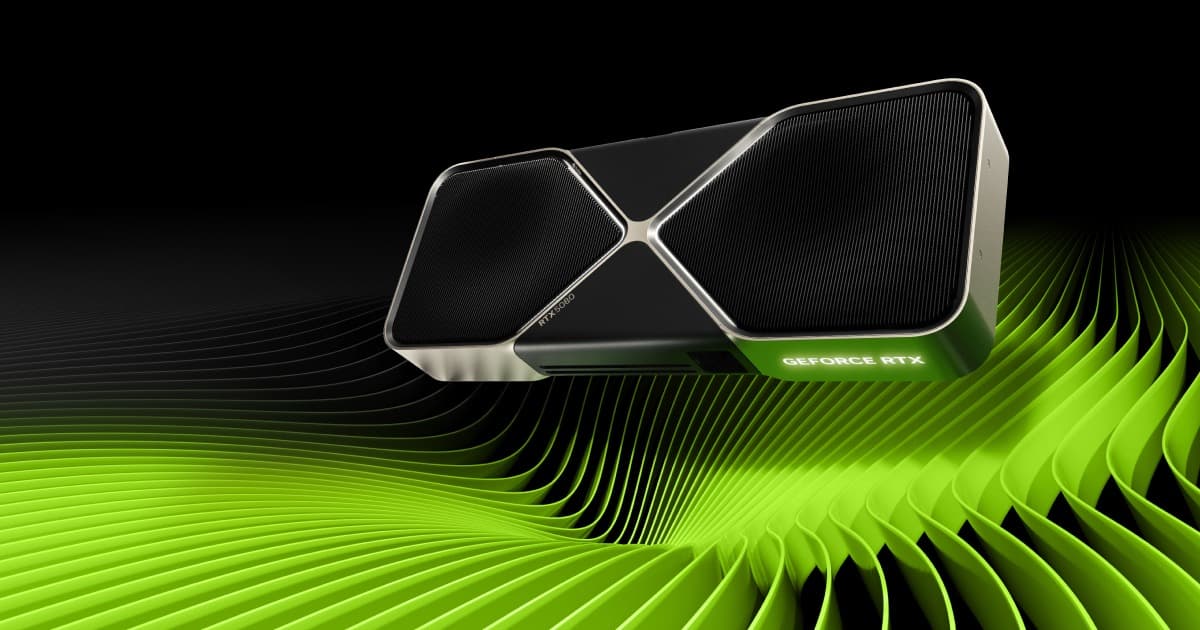
The benchmarking of the Jalapeño chip suggests it is highly competitive, particularly regarding energy efficiency. Research from SemiAnalysis indicates that the chip outperforms Nvidia’s Blackwell-class hardware in several performance-per-watt scenarios. However, experts caution that such comparisons must be contextualized. Because the Jalapeño utilizes modern HBM4 memory architecture, analysts believe a more accurate technical comparison would be against Nvidia’s upcoming Rubin platform, which also incorporates HBM4. While the Jalapeño shows promise in specialized inference tasks, industry experts note that Nvidia still maintains a significant lead in versatility and software ecosystem support. CUDA remains a powerful barrier to entry for custom silicon providers, meaning that while OpenAI's new chip may win in specific power-to-performance metrics, it does not yet fully replicate the comprehensive capabilities that Nvidia provides for the most compute-intensive training workloads.
Broadening Industry Impact
The introduction of the Jalapeño is part of a broader trend where hyperscalers and AI firms are bringing chip design in-house to optimize unit economics. Industry analysts observe that the cost of scaling AI infrastructure is substantial, and custom application-specific integrated circuits (ASICs) represent a viable path to reducing cooling and power distribution overhead. Experts from Omdia and Yole Group predict that as custom silicon becomes more prevalent, these ASICs may eventually overtake general-purpose GPUs in total deployment volume by 2028. For Nvidia, this represents a multi-front competitive threat. Since hyperscale cloud providers account for roughly half of the capital expenditure in AI infrastructure, any shift toward proprietary designs directly impacts the long-term margin potential for established chip manufacturers. OpenAI, previously one of Nvidia’s largest individual customers, is essentially using its new hardware to gain leverage in one of the most critical supply chain relationships in the tech industry.
⚖ The Balanced View
Supporting view
Supporters note that the Jalapeño chip offers superior performance-per-watt metrics compared to existing hardware, which could lead to significant savings in power and cooling costs for large-scale data centers.
Concerns & criticism
Critics and analysts observe that Nvidia’s deep-rooted software ecosystem, particularly CUDA, and its broad programmability remain superior for training large-scale models, suggesting the Jalapeño is currently a specialized solution rather than a total replacement.
→What's next
OpenAI plans to deploy the initial Jalapeño chips within its infrastructure by the end of 2026. Simultaneously, the company has confirmed that it is already actively developing the second and third generations of this semiconductor line.