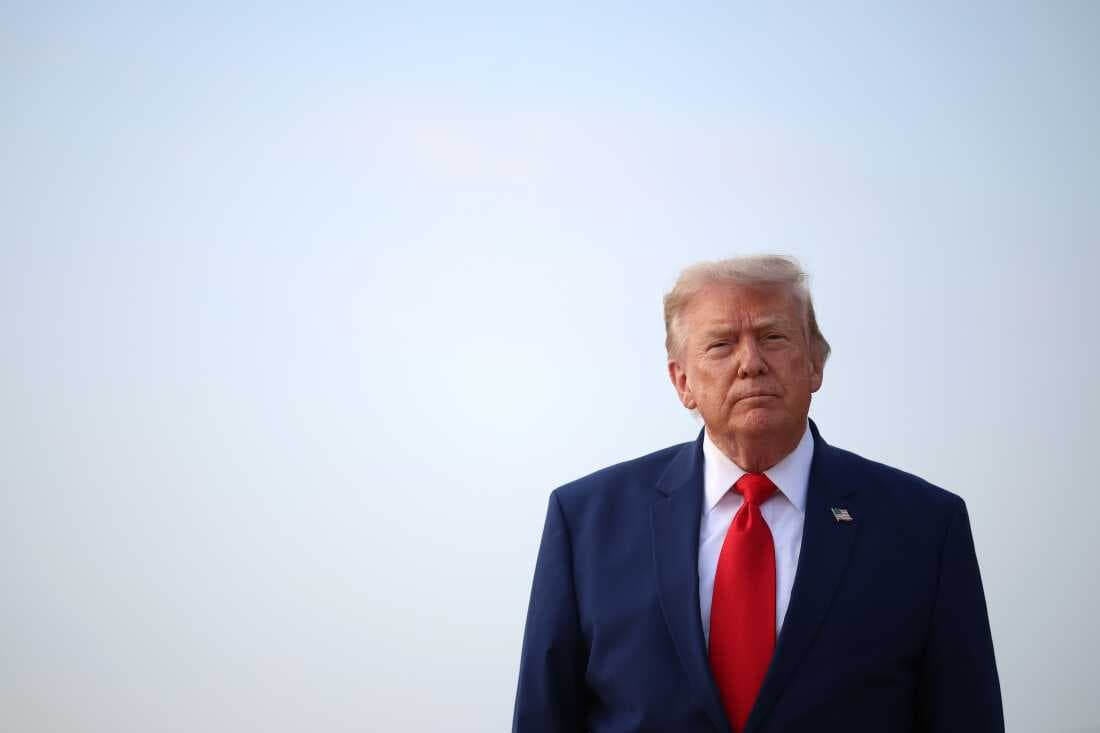

A U.S. District Court judge has ruled that the Trump administration’s decision to label AI company Anthropic a national security risk was an illegal act of retaliation. The court found the government’s directive to blacklist the company violated the First Amendment and lacked a factual basis.
The Court's Ruling
U.S. District Judge Rita F. Lin issued a significant ruling late Thursday, determining that the Trump administration acted illegally when it designated Anthropic as a supply-chain risk. The court vacated the government directives that had effectively banned federal agencies and defense contractors from working with the AI firm. In her opinion, Judge Lin characterized the administration’s actions as an instance of “unlawful retaliation” in direct violation of the First Amendment. The court emphasized that while the government is entitled to choose its technology vendors, it cannot use national security designations as a mechanism to punish companies that criticize government policy. Judge Lin explicitly stated that the “empty invocation of national security is not a blank check to punish and retaliate against government critics,” noting that the government failed to provide sufficient justification for the aggressive measures taken against the company.
Background of the Conflict
The dispute originated earlier this winter when Defense Secretary Pete Hegseth sought to renegotiate existing military AI contracts, aiming to grant the Department of Defense broader authority for “any lawful use” of artificial intelligence. While most AI developers ultimately accepted these revised terms, Anthropic maintained specific safety guidelines. The company refused to permit the integration of its models into systems designed for lethal autonomous warfare—defined as weapons capable of striking targets without human oversight—or for the mass surveillance of American citizens. Anthropic CEO Dario Amodei publicly defended this stance, arguing that in a narrow set of scenarios, AI technology could undermine rather than strengthen democratic values. This refusal triggered a series of confrontations with federal officials, leading to the administration’s decision to blacklist the company under the guise of a supply-chain risk.
Allegations of Retaliation
Judge Lin’s ruling underscored a notable disconnect between the government's rhetoric and its internal actions. She observed that the administration’s characterization of Anthropic as a threat to national security was contradicted by the Department of Defense’s ongoing desire to contract with the firm for other purposes, such as cybersecurity projects involving Anthropic’s new model, Mythos. Furthermore, the judge highlighted that the government at one point considered invoking the Defense Production Act regarding Anthropic, a move that would have classified the company as essential to national security rather than a threat. The court found that the evidence suggested the government’s primary motivation for the blacklisting was to make a public example of Anthropic due to its “arrogance” in challenging the administration’s contracting requirements and its willingness to speak publicly about the government's approach.
Technical and Security Implications
A central component of the government's failed argument involved claims that Anthropic maintained backdoor access to its technology once deployed within military systems. However, in the court proceedings, the federal defendants conceded that Anthropic lacks any such capability. Judge Lin noted that the government eventually backed away from its original risk assessment, acknowledging that Anthropic’s technology carries no more risk to national security than any other “black box” artificial intelligence model used by the military. This admission effectively removed the technical foundation for the administration’s supply-chain risk designation. Following the initial imposition of the blacklist, the Pentagon had moved to replace Anthropic’s influence by signing agreements with seven other AI vendors, including major industry players like Google, Microsoft, OpenAI, and SpaceX, though these contracts remain separate from the legality of the retaliatory measures against Anthropic.
⚖ The Balanced View
Supporting view
Anthropic maintains that its safety guardrails are a necessary ethical standard to prevent AI from undermining democratic values, and the company has expressed a desire to continue working productively with the government on national security initiatives.
Concerns & criticism
The Trump administration and the Department of Defense argued that their actions were a response to national security concerns, attempting to exert control over AI vendor contracts to ensure broad usage rights for military applications.
→What's next
Anthropic continues to be involved in ongoing litigation, with a separate lawsuit filed in Washington, D.C. still pending. It remains to be seen how federal agencies will navigate the reversal of the directives now that the court has formally vacated the blacklisting order.