
Physicists at CERN have successfully generated quark-gluon plasma—the hot, dense state of matter that existed moments after the Big Bang—by colliding oxygen and neon nuclei. This discovery reveals that the conditions required to replicate this primordial substance can be achieved with significantly smaller atomic elements than previous research established.
Understanding the Primordial Soup
In the immediate aftermath of the Big Bang, roughly a millionth of a second after the universe’s inception, matter did not exist in the structured forms we observe today. Instead, space was occupied by a chaotic, high-energy substance known as quark-gluon plasma (QGP). This state of matter consists of quarks—the fundamental building blocks of protons and neutrons—and gluons, the particles responsible for binding those quarks together. At these extreme temperatures and densities, quarks and gluons are not confined within atomic nuclei, allowing them to flow in a fluid-like state. As the universe continued its rapid expansion, it cooled significantly, forcing these particles to condense into the protons and neutrons that eventually formed the matter constituting our modern universe. Scientists have spent years attempting to replicate these conditions within particle colliders to better grasp the origins of reality.
Redefining Experimental Boundaries
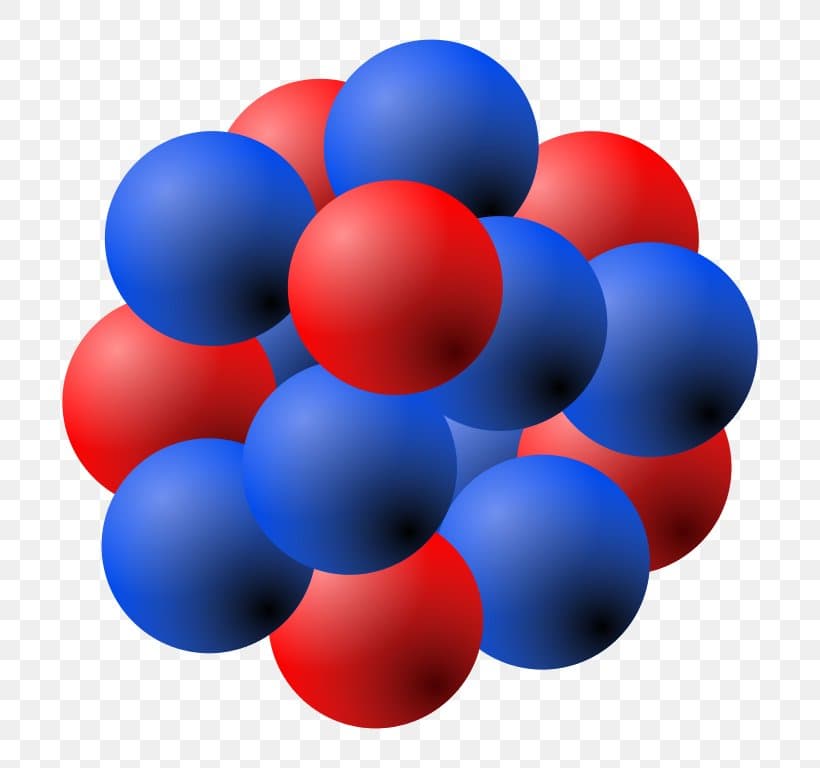
Historically, researchers relied on heavy elements like lead to simulate the environment of the early universe. Colliding these massive nuclei at speeds approaching that of light allowed physicists to generate enough energy density to observe QGP behavior. However, a recent experiment conducted at CERN has successfully pushed the boundaries of this research by utilizing much lighter nuclei. An international team of scientists reported in the journal Physical Review Letters that they successfully generated QGP using oxygen-16 and neon-20. These elements are less than ten percent of the mass of lead atoms, which had previously been considered among the lightest feasible options for creating this state of matter. By scaling down the mass of the colliding particles, researchers have gained new insights into the specific, fundamental conditions required for matter to transition into this extreme plasma state.
Observing Collective Fluid Behavior
The success of these collisions was measured by analyzing the behavior of the resulting debris. Despite the reduced mass of oxygen and neon compared to heavier alternatives, the experiment yielded signals clearly consistent with the expected characteristics of quark-gluon plasma. For an incredibly brief duration following the impact, the generated matter demonstrated collective expansion, moving with the properties of a fluid before eventually cooling and reverting into individual particles. This observation is crucial because it confirms that even on a much smaller scale, the fundamental physics governing the early universe can be replicated and studied in a controlled setting. You Zhou of the Niels Bohr Institute, a co-author of the study, noted that these results expand our collective knowledge regarding the threshold for creating such primordial matter, effectively creating what many in the field refer to as a 'little big bang.'
Implications for Cosmological Evolution
The ability to observe QGP through these lighter-element collisions offers a new window into the history of our universe. Because there is no accessible natural source of this primordial sludge in the modern cosmos, particle colliders serve as our only method for recreating these specific conditions. By understanding how the plasma behaved during the first few microseconds after the Big Bang, physicists hope to piece together the process through which energy transformed into the complex structures that make up the physical world today. This research not only validates existing theories about the early universe but also refines the technical parameters for future experiments. As physicists continue to probe the limits of matter, the findings from this CERN-led team serve as a cornerstone for mapping how the initial, hot, dense soup of the universe eventually cooled and evolved into the galaxies, stars, and planetary systems we study today.
⚖ The Balanced View
Supporting view
The research provides empirical evidence that QGP can be formed with lighter nuclei, broadening the scope of future experimental physics and confirming current models of particle behavior.
→What's next
Future experiments will likely focus on even smaller atomic nuclei to further define the absolute minimum requirements for creating quark-gluon plasma. Researchers intend to use this data to build more accurate models of how matter transitioned from a high-energy fluid into the stable particles that formed our current universe.